Showing posts with label Wii U. Show all posts

Tuesday, December 2, 2025

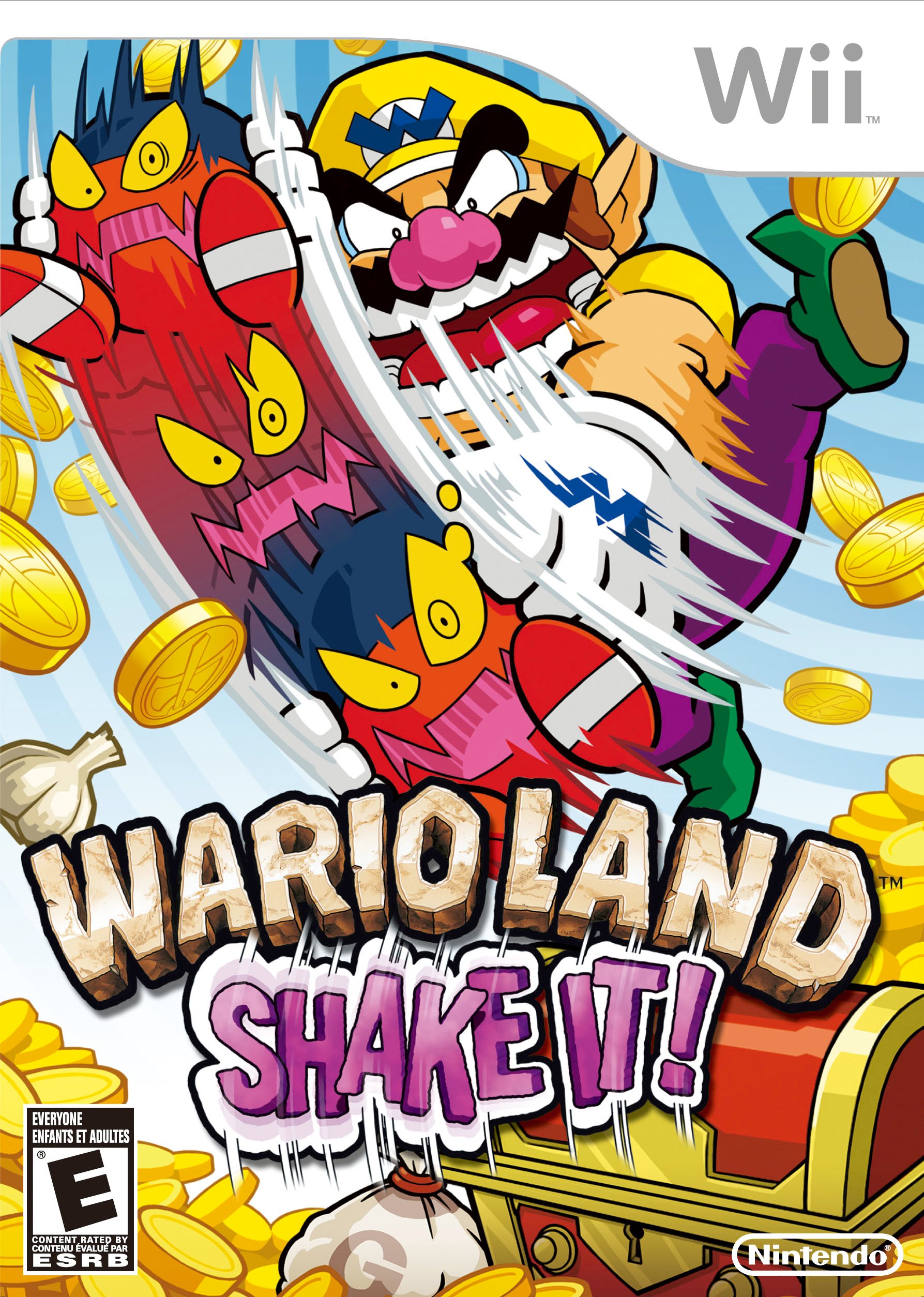
Wario Land: Shake It!


Wario Land: Shake It!

Developer: Good-Feel
Publisher: Nintendo
Original System: Wii
System Played On: Wii U
Rating: 3 stars 

On September 3, 2025, I defeated the Shake King, thus finishing Wario Land: Shake It for the Nintendo Wii (played via the background compatibility of my Wii U). In my playthrough, I collected 74% stages, 43% treasures and 11% missions. And I did it all in 10 2/3 gameplay hours over a span of a little over about 2 months. 

Wario Land: Shake It deserves all the praise it has received for it aesthetic. Wario Land: Shake It decided to go with an anime art style, and it's beautiful, gorgeous enough to rival a Studio Ghibli film. Even more impressive, Wario Land: Shake It uses its anime art style in both cutscenes and in gameplay, and the game smoothly transitions between the two of them. Even current gen consoles using photorealistic graphics in both their cutscenes and gameplay still have jarring noticeable differences between cutscenes and gameplay, yet a 7th gen console (and the Wii, as opposed to the PS3 or Xbox360, nonetheless!) using an anime art style can somehow do it. Seriously, this game is so stunning visually, that I sometimes forgot I was playing a video game, and I thought I was watching an anime movie or television show. For that alone, I would recommend this game to any otaku or weeb!

Although not praised as much yet still praised a lot, Wario Land: Shake It deserves all the praise it has received for its soundtrack. Seriously, I haven't hear so much music genre variety since Paper Mario: Color Splash (yeah, I know Paper Mario: Color Splash came after Wario Land: Shake It, but that's not the order I played them)! Furthermore, all the songs on the soundtrack are well orchestrated, instead of relying on some kind of computer synthesizer. My only complaint about the soundtrack is that the music did not always match the theme of the level, but unless actively listening for that incompatibility, nobody will notice. I personally did not notice until other reviews brought it up to me.

Not receiving praise yet it should, Wario Land: Shake It deserves praise for its screen use. See, Wario Land: Shake It came out in 2008, a year in which media outlets and consumers alike transitioned from the 4:3 ratio CRTVs to 16:9 ratio HDTVs. Video game designers, not knowing which TV their consumers owned, had to somehow account for owners of both types of televisions. Some developers would simply make the game only in the 4:3 ratio, leaving gamers on a 16:9 ratio HDTV with black void columns to the left and to the right (see WarioWare: Smooth Moves, for example). Likewise, some designers would add a static border, which is just a step up from the black void. Other developers would simply stretch out a 4:3 ratio to a 16:9 ratio for those using HDTVs, but that would distort the picture. Other designers would extend the visable screen for those using HDTVs, but with a game primarily made with the 4:3 ratio of CRTVs in mind, seeing extra screen adds little to no benefit to gameplay. Wario Land: Shake It solves this problem in an interesting way. The developers designed the game in 4:3 ratio for gamers still gaming on a CRTV, but for the players playing on the 16:9 ratio of HDTV, to the left and the right of the gameplay screen are borders that keep track of treasures and missions. Again, those gaming on 4:3 CRTVs miss out on nothing, and those playing on 16:9 HDTVs gain an additional benefit of a treasures and missions tracker. I thought this was pretty cool! I'm surprised more games of the time period did not do this.

Of course, as a Wii game, Wario Land: Shake It has motion controls. I have nothing against motion controls. I do not object to them at all. As a matter of fact, I firmly believe that motion controls have a crucial role in reaching true virtual reality. My only critique of motion controls, however, lies on the fact that motion control matches the motion made in real life. Following this simple principle explains why Wii Sports became such a success (outside its pack-in status with the Wii). Wii Tennis feels like swinging a tennis racket, Wii Golf feels like swinging a golf club, Wii Bowling feels like rolling a bowling ball, Wii Baseball feels like pitching & hitting, and Wii Boxing feels like throwing a punch (OK, sometimes it feels like slapping). Motion controls should never merely substitute a button press. Wario Land: Shake It is so inconsistent on this. I can comprehend shaking the Wiimote is like shaking money out of a bag. I can understanding slamming down the Wiimote to simulate punching the ground. Shaking the Wiimote to get Wario to swing on a bar does not compute. Tilting the Wiimote to change the angle of a cannon or to get a bucket car to move along the track does not make sense either (I don't equate this to tilting a joystick or leaning the body).

As with most video games (open world video games as the exception), Wario Land: Shake It progressively unveils the map. Wario Land: Shake It takes revealing the map in an interesting way. After beating each boss, Wario goes back to the Pirate Shop on Captain Syrup's ship the Sweet Stuff to find a map of the next continent available. The game never provides an explanation for this. The game never claims that defeating the boss lifted some kind of fog covering the land. The game doesn't even try to convince that Captain Syrup just so happens to find a lost map piece by accident at the same exact time Wario defeated the boss. The map piece just ends up there. Without a game explanation, it leave anyone wondering why the Pirate Shop couldn't have all the continent maps immediately available. It would not have taken that much effort to make up an in-game explanation. Of course, since these maps come from a Pirate Shop, they cost in-game currency to obtain. Naturally, the price increases as the game progresses. As a result, advancing in the game can come to a halt if failing to collect enough in-game currency. In turn, this can create unnecessary padding, forcing backtracking to replay level previously tread, just to collect more currency. Fortunately for me, I ended up 100% fully completing the first few levels (collecting all treasures and missions) just in the attempt to collect more currency to purchase the next continent map. If the developers had this in mind, good for them. If the designers did not intend for this, then they have created an example of unnecessary padding. Speaking of the map, my gameplay progress revealed that I uncovered 74% of the stages. That's because some of the levels had secret, hidden maps, which need to be discovered in the level. If playing a repeat playthrough after beating the final boss, the ground will sparkle where the secret map is buried. If playing the level for the first time, no such indicator exists, despite the fact the gamer can still dig up the hidden map if discovering, even if with some help (like a walkthrough). It was totally unnecessary to keep these maps so secret and hidden with no indicators on the first playthrough and then to give hints on repeat playthroughs. Make the hints available immediately, and then make the challenge reaching said map.

Yes, Captain Syrup makes her return for the first time since Wario Land II, and she fits in exactly where she left off as a character. She steals, she kidnaps, she deceives, she overcharges and she flirts, all in the name of making more money and getting richer. Her return never felt like a shoe-in for the sake of invoking feelings of nostalgia. She returned for the sake of fulfilling a role that fit her character, which I can appreciate. (Speaking of Captain Syrup, make I make sidebar here? Common video game knowledge will reveal that Waluigi came in existence for the sake of creating Wario a partner for sports game that played doubles, like tennis. Waluigi does indeed work as a Wario version of Luigi, but it begs the question, "Why wasn't Captain Syrup Wario's doubles partner?" After all, Captain Syrup is just a female version of Wario. It would have been nice to have Captain Syrup be Wario's doubles partner, for it would have been the first mixed gender partners.)

[SPOILER ALERT!!] The final boss the Shake King (probably a wordplay on Viking) had me intrigued at first, but then it lost my interest. At first, the Shake King attacks with a dash attack, a earthquake punch and fireballs. Minus the fireballs, the Shake King shares the same attacks as Wario, so the final boss battle at first feels like an equal and fair match between Wario and the Shake King to determine who can utilize the attacks the best. The Shake King's second phase has the same or similar attacks, just more of them, so it feels like an expected and necessary harder test. For the third and final phase, however, the Shake King starts pulling out magic that has never occurred in the entirety of the game. Some of these attacks cane one-hit KO Wario or close to it. This felt so unfair. Final boss battles should feel like a final test on how to utilize all controls and attacks. I had no way to prepare for this final boss battle. The best way way to prepare was to fight the Shake King over and over again. Doing so made phase 1 and 2 quite boring, for the gamer will learn the patterns so well, to the point of delivering all the damage while taking no damage. After all, Wario will need all the life he can get for those final phase attacks! Speaking of which, the game does allow the player to purchase a health potion at the Pirate Shop, which will automatically refill the health bar once all health runs out in battle. Actually, Wario has health potions at his disposal throughout the whole game, but not until the final boss battle does health potions feel absolutely necessary because of the unfairness of the final boss battle. Of course, health potions coming from the Pirate Shop means that they cost in-game currency. If the gamer does not have enough, it will require backtracking to previous levels to earn more currency. Let's say the player earns enough money, purchases a health potion, fights the Shake King, and then loses the final boss battle. The gamer will not get the health potion back. The player must buy another one. If Wario does not have enough money, back to grinding for coins in the prior levels! While this system rewards those who learn the Shake King's patterns, this is not fun. It should have stayed a fair fight between Wario and the Shake King over who knew and utilized the attacks the best, like in Super Mario Land 2: 6 Golden Coins (ironically) [/END SPOILERS]

In conclusion, Wario Land: Shake It is another Wario Land game that once again zooms in and focuses too much on the gimmick of its original system, which in this case, is the motion controls of the Wii. The problem with such a heavy reliance on the gimmick of the Wii's motion controls lies within the disconnect between the motion control input and the action the motion controls should represent. It is such a shame, for the game has a great music soundtrack, great art style and great screen use. Not only do motion controls mar the game's great points, questionable gameplay mechanics and a final boss battle somewhere between unfair and not fun further mar the game's great points. All in all, the highs match the lows, leaving a game somewhere between average and mediocre. That too is a shame because Wario Land: Shake It trends the Wario Land series in an upward direction. True, Wario Land: Shake It does not return the Wario Land series to the glory days of the first 4 games, especially in comparison to Wario Land 4. Wario Land: Shake It, however, does find a way to zoom in and focus on the original system's gimmick yet incorporate the elements that made Wario Land fans fall in love with Wario Land in the first place. This series looked like it could improved to its former glory days, yet Nintendo decided to cut it off, with its last entry on the Wii. That also a shame. As the Switch 1 came to the end of its life to make way for the Switch 2, the Wario Land series was one of the few franchises left untouched by the Switch 1. A Switch Wario Land game that returned to the gameplay mechanics of Wario Land 4 and incorporated elements unique to the Switch hardware would have been loved by Wario Land fans specifically and Nintendo fans in general. Unfortunately, it never came to be, but then again, maybe for good reason. Wario did continue on from the Wii in the form of WarioWare, with a Wii U game, a 3DS game and 2 Switch 1 games. In the long run and in the bigger picture, the Wario Land game really did not do that much to differentiate or to distinguish itself from the Super Mario series. Heck, some of those elements intended to make Wario Land games unique now do appear in Super Mario games. The microgames of the WarioWare games, however, do differ from the minigames of the Mario Party games. Therefore, maybe Wario does fit better as the mascot of the WarioWare microgames series than as the mascot for Wario Land platforming games. Thus, I am glad that the Wario Land series ended, and I am happy to know it ended on a more optimistic note than Wario World or Wario: Master of Disguise. I will always look forward to the next WarioWare installment, but I will also fondly reminisce on the nostalgia of a Wario Land game.

Final Ranking
1. Wario Land 4
2. Wario Land 3
3. Wario Land II
4. Wario Land (1)
5. Wario Land: Shake It!
6. Wario World
7. Wario: Master of Disguise

Wednesday, December 28, 2022

New Super Luigi U


New Super Luigi U
Developer: Nintendo EAD
Publisher: Nintendo
Original System: Wii U
System Played On: Wii U
Rating: 3 stars

On May 14, 2022, I beat Bowser, thus finishing New Super Luigi U on the Nintendo Wii U! In my playthrough, I did not collect all the star coins, not even for a single world, so I did not unlock any of the star road levels. I did find all the secret exits, so I at least unlocked all the secret levels. Between beating Bowser and playing every level (including the secret levels), I earned 2 stars on my profile. And I did it all in 7 1/3 gameplay hours over the span of about a month.

Way back when, I called New Super Luigi U an expansion pack to New super mario bros u, and after playing through the whole game, I still stand by it that. Nintendo would seem to agree with me, as New Super Luigi U would eventually come packaged with New Super Mario Bros U on the same disc, and they released the games together on the Nintendo Switch port. Therefore, going into this New Super Luigi U, I expected the same exact levels, except with the 100 second time limit for the extra challenge. While New Super Luigi U keeps the same worlds as New Super Mario Bros U, it did not keep the same levels. The developers of New Super Luigi U kept the 100 second time limit in the forefront of the brains when designing levels. The developers definitely shortened levels. They gave you plenty of time if the gamer merely wants to reach the flagpole at the end of the lee. If the player wants to fully complete the game by collecting all the star coins, he or she barely has enough time. Some of the levels probably need multiple playthroughs because the star coin needs all 100 seconds to reach, to grab and to make it to the flagpole at the end. This has its strengths and weaknesses. On one hand, it encourages multiple playthroughs of a level, giving the game replay value. On the other hand, this feels like padding, as the goal of every level should be to collect all 3 star coins and reach the flagpole. Then again, maybe I'm just a n00b who needs to "git gud."

As mentioned above, what separates New Super Luigi U from New Super Mario Bros U (or any New Super Mario Bros game or any Super Mario game, for that matter) is that every level has a 100 second time limit literally. If you ever paid close attention to a typical Super Mario game timer, you'll notice that the timer ticks fairly fast. That's because a tick off a Super Mario game timer last somewhere between 0.4 seconds and 0.7 seconds, depending on the game. In New Super Luigi U, a tick off the time literally takes 1 second. They are in perfect sync. I kind of like this better. Going into each level, I had a better sense of how much time I left if I needed to back track to attempt to get a star coin. I'm not saying all future 2D (2.5D?) Super Mario games need a 100 second time, but they should all keep the timer to real seconds, even if this means shorting the timer on average.

The only time the 100 second timer hurt the gameplay was with the Boo houses. In a traditional Boo house in a typical Super Mario game, the Boo house tries to get the gamer lost, and the gamer must find the way out of the Boo house. Since New Super Luigi U only gives the player 100 seconds to escape, the game really can't get the player lost. Therefore, Boo houses turn into just another level, just with a soft "horror" theme to it. Seriously, Boo houses feel just like another level, except the enemies are Boos instead of any other enemy. I guess it is technically harder because you can't jump on Boos, but that barely makes the level a bit harder to consider the Boo house a special level.

New Super Luigi U's worst weakness is the story. It's literally the exact same as New Super Mario Bros. U, except Mario is for some reason absent. I know so many people have already said it, but I will say it again. Why wasn't Luigi saving Daisy? Here, let me add a few more ideas, which are a bit more original. Perhaps Luigi could save Mario, like he does in the Luigi's Mansion trilogy. Maybe Bowser could have kidnapped both Mario and Peach at the same time, and Luigi has to rescue both of them. Either option would have been better than copy and paste from New Super Mario Bros U, except with Mario absent. Heck, New Super Luigi doesn't even provide a good answer for why Mario is absent!

Besides that, there is nothing much to say. Besides the 100 second timer and Luigi's loftier jumps, it's traditional Super Mario game, or more specifically, a typical New Super Mario Bros game. There are hidden 8-bit Luigi sprites in each level, but the game does not keep track of the ones you found, and it does not go towards completion. The one little thing I do appreciate is how Luigi responds to reaching the flagpole at the end of the level. Mario traditionally says, "Here we go!" or "I did it!" or "Let's Go!" When Luigi typically gets to the end of the level, he says, "Whew! Made it!" This little detail displays the less confident and more scaredy-cat nature of Luigi, as opposed to his brother Mario, who displays more confidence and less fear.

Friday, December 31, 2021

2021: The Year of Paper Mario

 After The Year of Super Mario in 2020, after playing 21 platforming games in 2020 (22 if counting Super Mario 35), I wanted a changed in video game genre. I considered changing over to the RPG (role playing game) genre. I had not played an RPG since my Pokémon days, and I thought it would be nice to get back into them. My only hesitation is that I know RPGs can be an investment in time, and going through both an adoption and a dissertation, I could not afford a game which required an investment in time. I looked for a light RPG, and I assumed that Paper Mario looked like a lighter RPG. I also found myself interested about the recent conversation about the Paper Mario series. It seems like the Paper Mario series has gone from RPG to RPG Light to RPG elements. With the recent Paper Mario games, you either love them or hate them; there is no middle ground. As somebody not blinded by nostalgia glasses, I wanted to see if these games held up by themselves, with or without embracing the RPG genre, and if one can just like Paper Mario games. Therefore, I declared 2021 the Year of Paper Mario! For the year of 2021, I aimed to finish all 6 Paper Mario games. Naturally, it only made sense to begin with the original that started it all, and then play in order of release.
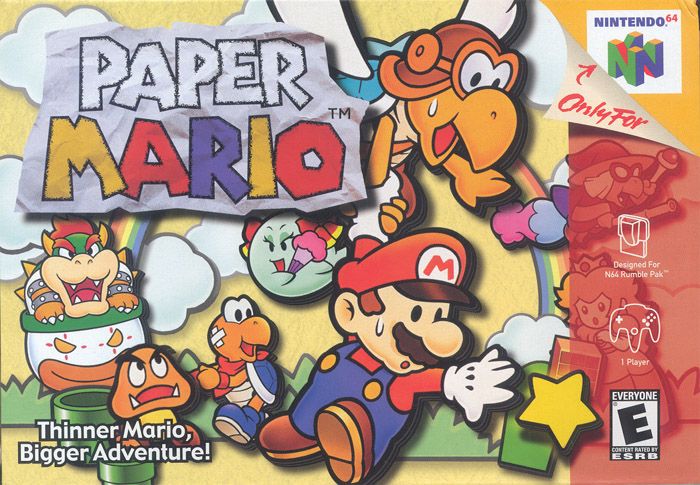

On February 27, 2 months in 2021, I saved all 7 star spirits and defeated Bowser (twice!), thus finishing Paper Mario for the Nintendo 64 (via the Wii U Virtual Console)! In my playthrough, I collected 33 star pieces and 28 badges. I leveled up Mario to level 23, giving up 55 HP (maxed out), 55 FP (maxed out) and 18 badge points. I also leveled up all 8 party members to super level and 5 party members to ultra level. And I did it all in a matter of 21 hours. If familiar with the back story of Paper Mario, this game was originally supposed to be a sequel to Super Mario RPG: Legend of the Seven Stars. While Nintendo went a different direction early in development, some of the gameplay still felt reminiscent of Super Mario RPG. For example, the quick time events give the gamer something to do, besides selecting attacks and waiting. At the same time, however, the gameplay feels watered down compared to Super Mario RPG. Mario only has 1 partner to help in battle, as opposed to 2, although these partners can switch out. Only Mario can use items and the special star moves, whereas each character in Super Mario RPG can use attacks, special attacks, items and a defense stance. The level up system rewards increasing HP first and then FP, whereas Super Mario RPG rewards equally improving the characters. I think I prefer the gameplay of Super Mario RPG over Paper Mario. Nintendo had a good attempt at an RPG, but Nintendo should have left RPGs to Square (Enix), the king of RPGs. Similarly, the story of Paper Mario resonates with Super Mario RPG: Legend of the Seven Stars. Again, Mario has to collect 7 stars, but this time, the stars are alive (that is, personified), and these stars give you power (which gives the stars more importance than the McGuffin status in Super Mario RPG). The only problem is that big bad boss is Bowser again, instead of an original character like Smithy. Yes, I know Shigeru Miyamoto does not like his original property messed with, and yes, I know it will get worse, but Mario versus Bowser just feels like another Mario game. It's just that now the combat is RPG instead of platforming. And why does Mario have to face off against Bowser? To save Princess Peach, of course! Again, this feels like another Mario game. Just substitute platforming with RPG.


About 2 months later, on May 1, I defeated the Shadow Queen, thus finishing Paper Mario: The Thousand Year Door for the Nintendo GameCube (via the backwards compatibility on the Nintendo Wii). During my playthrough, not only did I collect the 7 crystal stars, I collected 73 star pieces, 48 of 85 badges (that's a majority of them!), all 42 shine sprites (thus fully upgrading all partners but the optional partner Ms. Mouz), and I also journaled 95 of 124 tattles. And I did it in 36 1/2 hours. And I have a hot take: the original Paper Mario is better than The Thousand Year Door. I felt the game had both positives and negatives. Let me get the positives worth complimenting out of the way first. Paper Mario: The Thousand Year Door has more RPG elements. I like how now Mario's health and the partner's health are separate. I also like how the quick time events give something to do as turns play out, not just a set it and forget it. I like story, for the most part. I appreciate how it wasn't Bowser trying to steal the Mushroom Kingdom from Princess Peach. As a matter of fact, both Bowser and Peach have their own subplots, which the gamer can play. My favorite were the Bowser parts, as many of them re-enacted famous levels from the first Super Mario Bros. In some regards, Paper Mario: Thousand Year Door is more of the original Super Paper Mario, with some fine tuning. Now let's get to negative. Somebody should really discipline the game developers, for at sometimes I do not think they understand good game development. It seemed like every chapter involved backtracking with no good reason. I sometimes even thought the developers included so much backtracking to pad time, which it really didn't need. The worst infringement was near the end (semi-spoiler, I guess) when the game has the player travel the entire world map to look for a character, only to find out he was at the starting point! Yes, I know that was the joke, but without any real instant quick travel, it was annoying! The puzzle segments were not always self-explanatory. I got the official Nintendo Power walkthrough packaged with my game, and without it, I would never have solved the puzzles. True to Mario, sometimes the game required platforming, and the platforming felt off. I would press A and Mario would not jump. Mario would fall short to a jump he should have made. Yes, ultimately it is a RPG, so jumping is not supposed to spot on as a platformer, but it should be manageable and not frustrating. Then came final showdown, which was like an Elite Three because it had 3 boss fights in a row, only allowing healing and saving between the second and third. I only survived the first two because I figured out a way to level up between the first and second, thus healing me. But I legitimately got stuck on the final boss. The only way I could get through was through grinding. Those past 2 sentences I should never have to say in a casual RPG, like Paper Mario. Since Mario maxes out at level 30, once the player reaches level 25, leveling up becomes grinding to its fullest definition. No matter who are Mario's opponents, Mario only gains 1 star point (Paper Mario's experience points) per battle. If you do the math, then yes, leveling up Mario to level 30 would take 500 star points or 500 random battles. I managed to get to level 27, but from then, I focused on upgrading my partners. While Thousand Year Door had fine-tuned RPG gameplay and a fresh story, it also had dully repetitious backtracking, puzzles more confusing than intriguing, off platforming and bosses requiring grinding to the right level. Nevertheless, after playing through the entire series, I looked back at this game and decied the positives outweighed the negatives. Paper Mario: The Thousand Year Door would become my favorite game of the series.


About a month later, by the end of the month of May, I beat Count Bleck and defeated Mr. L & Dimentio, thus finishing Super paper Mario for the Nintendo Wii! This is the 3rd Paper Mario game I have played and finished. In my playthrough, not only did I collect the 8 pure hearts, I also collected all 12 Pixls (which means I did do both Pixl side quests, including the Pit of 100 Trials in Flipside), 46 of 256 cards, 4 of 96 recipes and 999 coins, thus maxing out my coin counter. I earned a high score of 783,270, leveling up Mario (and team) to level 17, giving Mario (and gang) an HP of 50 and an attack of 10 (20 for Bowser). And I did it all in 18 3/4 gameplay hours over the span of roughly a month (more like 8 days because I only played Super Paper Mario on the weekends). Super Paper Mario is so controversial among Nintendo fans, not because it's a bad game, but because the gameplay shifted from a full RPG to a platformer with RPG elements. Yes, if you're looking for a full RPG, Super Paper Mario will disappoint you. If you're willing to try a platformer with RPG elements, Super Paper Mario is a good choice. They do seem to blend the two together well. For starters, some of the levels clearly have their inspiration from the first Super Mario Bros., which will give you a dose of nostalgia. Then inserting the RPG elements allows the developers to provide a new game experience to old level designs by experimenting. It was nice to take damage and not get an immediate game over. By adding elements from RPGs, which not only includes gameplay mechanics but also story mechanics, Super Paper Mario has demonstrated that platformers don't merely have to consist of reaching the end of the level. Platforming levels can have both enemies and NPCs to interact with, which can progress the story.  Platforming levels can have buildings to enter and dungeons to explore. The story does not have to be an overarching premise. It can develop in every world and in every level. It's a shame Shigeru Miyamoto tries to keep the story in a Mario game to a minimum because Super Paper Mario demonstrated that platformers can have in-depth stories, especially thanks to the RPG elements. Speaking of story, this story feels the closest to Super Mario RPG because it has Mario teaming up with Bowser and Princess Peach to fight a brand new boss, whose henchmen consist of both familiar enemies and new enemies. While criticism might come for taking Super Paper Mario far away from the RPG gameplay of Super Mario RPG (from which the Paper Mario series descended), Super Paper Mario has the closest story to Super Mario RPG yet in the series. While I lean more towards the like it than dislike it crowd, I do see it has faults. I don't understand why only Mario can flip from 2D to 3D, besides the fact it becomes Mario's special skill. If this is Paper Mario, where even enemies can flip, every team member should flip, too. Think of something else to give Mario a special skill. On a similar note, it became annoying that every team member's special skill was mapped to a different button. Since the A button has no use outside Mario (because the A button is mapped to Mario's special skill), then map all the special skills to the A button. Speaking of buttons, I also missed the feature where the player could back in dialogue if the player missed something by reading too fast. The B button remained unmapped throughout the whole game; it could've had that purpose. Sometimes the worlds felt unbalanced because one world could take a half hour and another world could take 2 hours. One could argue that the game is too easy. Coins are too easy to get. I maxed out my coin counter a couple times, despite buying 2 warp pipes. I didn't get a single game over (OK, technically I did once, but I would argue that I got softlocked because I got stuck in a place where I couldn't get out and only receive damage). This would especially include the final boss battle, but one could technically argue the final boss battle was so easy for me because I leveled Mario (and team) up so much. For my overall opinion, I will again say what I said earlier. If you're looking for a standard, typical RPG, it's a bad game. If you're looking for a platformer with RPG elements, it's a good game.


Almost a month to the date of finishing the last time, on June 27, I Defeated Bowser, thus finishing Paper Mario Sticker Star on the Nintendo 3DS. In my playthrough, I collected all 6 royal stickers, all 38 comet pieces and all 16 HP hearts, giving Mario the max HP of 100. Unfortunately, I only discovered 4/5 Luigi stickers, and I came up much shorter on secret doors. Altogether, it took me 20 gameplay hours over the span of about a month (according to my 3DS, I averaged 1 hour 57 minutes per session). And now I see why Nintendo fans and Paper Mario fans alike consider Sticker Star the worst game in the series. A little background to preface this review. When planning for Paper Mario Sticker Star, Shigeru Myamoto has 2 new rules for Paper Mario. First, since Paper Mario is a subseries of the Mario series, all characters had to come from the Mario world (i.e. Mushroom Kingdom) and no new characters could be created. Second, since Paper Mario is a subseries of the Mario series, Mario games do not have complicated stories, so the story must be simple. These 2 rules did a great disservice to the Paper Mario series. In order to keep the story short and sweet, the story downgraded to yet again Bowser kidnapping Peach to get ahold of a magical power. In order to keep the story to just Mario characters, there are no teammates for Mario. Mario works alone. Any "ally" (here defined as a non-combatant NPC) has to be a Toad, and there a lot of Toads in this game. All the enemies are familiar from the Super Mario series. Even Bowser's sidekick got downgraded from Kami Koopa to random generic magikoopa. The only original character is Kersti, a crown sticker personified, but she is the Navi of this Paper Mario game, only there to give hints and tips to Mario when lost. This lack of original characters and plot made the story quite bland. Then there's the gameplay. The "good news" (if you want to call it that) they brought back the turn-based battle system, and it even comes back with time hits. The bad news is that Mario does not gain experience points or level up from the battling. It makes you wonder, "Then what's the point of this battle system?" To make matters worse, in order to execute attacks, you must have a sticker, which can be found around the world and in shops. Without the sticker, you're out of luck. Without the experience points and leveling up, alongside needing stickers, the gamer wants to avoid battles. When caught in a battle, the player wants to run away, which he or she can, as long as he or she mashes A enough. Still sometimes, though, the even that won't allow Mario to escape. The gamer asks, "Why do I have to stay and battle?" and the game answers, "Just because." A game where the player wants to avoid the primary gameplay loop is not a good game. By the end of game and by the end of series, I joined so many others by concluding that Paper Mario: Sticker Star is the worst Paper Mario game in the series.


2 months and 1 day later, on August 28, I defeated Black Bowser (man, that sounds racist), thus finishing Paper Mario: Color Splash for the Nintendo Wii U! In my playthrough I collected all 60 basic cards, 37/72 enemy cards (that's a majority of them!), all 27 thing cards, 24/40 artwork (that's a majority of them!) and 20/33 records (that's a majority of them!). I also earned 5/6 banners, meaning I found all the cut-outs, executed over 200 excellent attacks, collected over 10,000 coins, bought over 200 cards, and beat all Roshambo temples. The only banner I did not earn was the colorization banner because I only reached 61% colorization (hey, that's 3/5!). And I did it all in 40 gameplay hours over a span of 2 months real time. Just like Thousand Year Door, Color Splash had both its positives and negatives. Let's start with the positives. Up to this point, Paper Mario: Color Splash is the most beautiful Paper Mario game, in aesthetic and graphics. Everything in the world genuinely looks like paper or carboard, especially with the white border around all the characters (I know that's a hot take, but I think the white border really sells the paper aesthetic ). Someone might even think Nintendo found a way to make a stop motion video game. Nintendo knew if they want to make the focal point of this Paper Mario game colors, they had to bring the colors. Indeed, they truly brought the colors. All the colors in the game were bright and vibrant.  I especially appreciate how they divided the game's world into 6 main colors, and the levels within the world all have shades of those colors (for example Cherry Lake & Crimson Tower in Red World and Plum Park & Violet Passage in Purple World). Also deserving praise is the soundtrack. Up to this point, Paper Mario: Color Splash has one of the most beautiful soundtracks. Koji Kondo has created one of the best soundtracks in his career. The soundtrack covers a wide array of genres, and none of them seem out of place. The game credits 29 musicians, each for their own instrument, and they deserve it. This game definitely needs to be played with television sound all the way up or wearing headphones or earbuds. Then comes the gameplay. The primary gameplay loop from Paper Mario: Sticker Star returns to Paper Mario: Color Splash. The battle sequence is turn-based, but it is not a turn-based RPG, meaning no experience points and no levels, but time hits still reappear. This time, however, it's more complicated. Instead of stickers, Color Splash uses cards. First, the gamer has to select the card on the touch screen. Nintendo must have heard the complaints about the lack of space for stickers because Color Splash has room for 99 cards, and all cards are the same size, just taking up 1 slot. Rarely will the player run out of room for cards (that only happened once or twice for me). Second, the player has to paint the card. After all, it would not be a color splash without paint. Paint increases damage and likelihood of perfectly timed attacks. Players can use cards without paint, but it will do less damage, and it will less likely lead to multiple attacks. Third, gamers have to flick the card from the Wii U Game Pad to the TV. Yes, 3 moves to execute an attack (four if including pressing A/tapping the screen for timed attacks). It felt like a lot to execute an attack, especially next to Sticker Star, in which the player had to merely tap on the sticker. Furthermore, this new primary game loop requires the gamer to have both cards and paint in inventory to execute an attack. Again, yes, technically an attack does not need paint, but it will hinder without it. And yes, some cards come already painted. Furthermore, to be honest, the game provides plenty of opportunities to collect point, as I personally only ran out of paint once or twice. Nevertheless, it complicates the primary game loop. It has come a far way from merely pressing a button to select an attack, as seen in the first 2 Paper Mario games. The complication becomes even less worth it knowing it will not give experience points or leveling up (oh, more HP comes as a result of beating a world boss and recovering a big paint star). Just like Paper Mario: Sticker Star, Paper Mario: Color Splash divides into 6 worlds. Since this Paper Mario game is subtitled Color Splash, all the worlds have color names. Furthermore, the levels within the world all  the levels within the world all have shades of those colors. For example Cherry Lake & Crimson Tower in Red World, and Plum Park & Violet Passage in Purple World. Nintendo deserves praise for that creativity. On the flip side, however, Color Splash has no good reason why the divide the game into worlds and levels. Dividing into worlds and levels made sense for Sticker Star, for the 3DS may not have the power to handle a single, open world. The original Paper Mario had a single, open world on the Nintendo 64, and Paper Mario: Thousand Year Door had a single, open world on the GameCube. Surely, the Wii U could handle a single, open world. Just like Sticker Star, Shigeru Miyamoto and Takashi Tezuka supervised Color Splash, which explains a lot. If unfamiliar with Nintendo, Shigeru Miyamoto and Takashi Tezuka supervise the Super Mario series. Super Mario games always divide into worlds and levels, so naturally, Paper Mario: Color Splash has to divide into worlds and level to feel like a Super Mario game (perhaps to attract a wider audience?). What makes worlds and level so bad is that it makes apparent the pacing of the game. I kept track how long it took me to get each big color star. It took me (in order of getting the stars) 6 1/4 hours for the red paint star, 4 3/4 hours for the yellow paint star, 5 3/4 hours for the blue paint star, 4 3/5 hours for the purple star, 5 1/2 hours for the orange star, 6 3/4 hours for the green star, 6 2/5 hours to beat Bowser, for a total of 40 hours. Paper Mario: Thousand Year Door took a little less (36 1/2 hours), and Thousand Year Door required collecting stars, but it did not feel so slow because it had a single, open world. Splitting the game into worlds and levels made apparently the slow pacing of the game. Once again, because Miyamoto and Takashi Tezuka supervised Paper Mario: Color Splash, the game has no unique characters besides the companion Hugh, a paint can (get the pun?). This companion Hugh is not to be confused with the partners of the original or Thousand Year Door (and maybe Super Paper Mario?) because Hugh does not attack. Just like Kersti in Sticker Star, Hugh merely gives hints, and to be honest, Hugh is not good at giving hints. Whenever the gamer wants a little hint, Hugh gives a big and obvious hint, pretty much saying the answer. Whenever the player needs a big hint, Hugh pretty much says, "I don't know, go ask the Hint Toad," which is all the way back at the "hub level" Prism Plaza and requires 10 coins for a vague hint! Just like Kersti in Sticker Star, Hugh is almost worthless. Also just like Sticker Star, Color Splash has a problem with puzzles that it thinks is obvious, but in reality, it is not so obvious. Similar to Sticker Star, nothing feels more annoying than needing a certain thing to solve the puzzle, but that thing is not in the inventory, so the gamer has to either find the thing again or traverse back to the "hub level" Prism Plaza to buy the thing. Also due to Shigeru Miyamoto and Takashi Tezuka supervising Color Splash, the game plot comes down to Bowser kidnapping Princess Peach. At least this time Bowser delays kidnapping Princess Peach to change things up a bit. [SPOILER ALERT!] The game tries to portray Bowser not in control, rather, controlled by the black paint, but this does not really change things up that much [/END SPOILER]. Probably also due to Miyamoto and Tezuka supervising Color Splash, each world's boss is a Koopaling. Although the first appearance of the Koopalings in the Paper Mario franchise, the oversaturation of the Koopalings in the Super Mario Bros. series makes the boss levels in Color Splash feel unoriginal. Even an oversized standard enemy, another staple of the Super Mario series, would have felt more original. While a bit tempting to mark this game as the worst, even worse than Sticker Star, I ultimately recognize this game is an improved Sticker Star, and since Nintendo improved on Sticker Star with Color Splash, Color Splash, by default, ends up higher than Sticker Star.
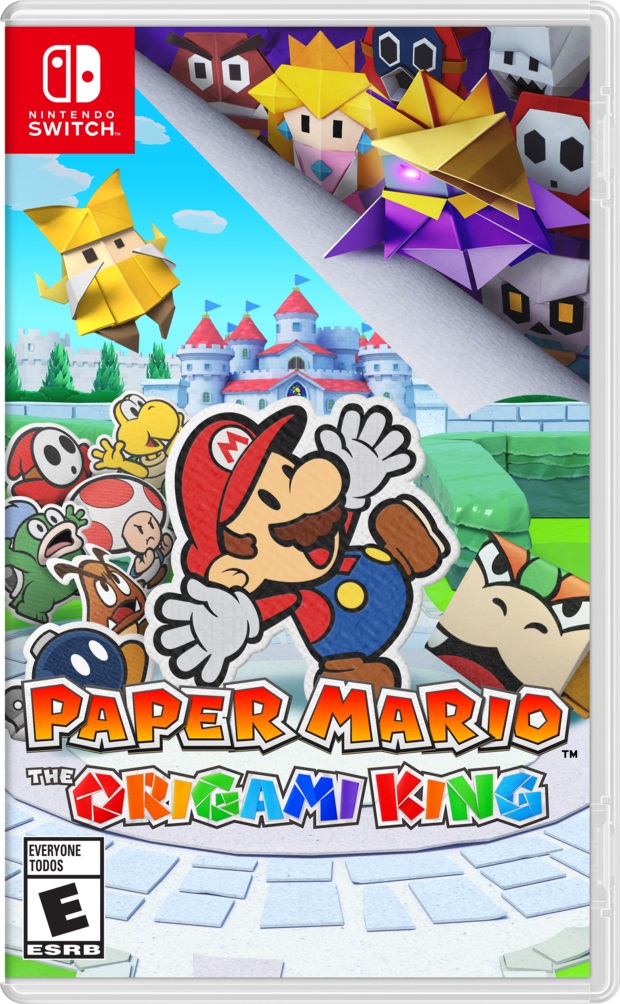

Once September rolled around, I started on Paper Mario: The Origami King, the most recent and last entry of the Paper Mario series. About a month and a half later, on October 16, I defeated Olly, thus finishing Paper Mario: The Origami King on the Nintendo Switch! This is the 6th Paper Mario game I have played and finished. During my playthrough, I also rescued 353 Toads. And I did it all in about 27 1/2 gameplay hours over a span of about 1 1/2 months. Aesthetically, Paper Mario: The Origami King looks just as good, if not better, than Paper Mario: Color Splash. The paper is so realistic-looking, somebody might even wonder how Nintendo made a stop-motion video game. This is especially noticeable when the game has ripped up paper and paper confetti, which both add to the aesthetic. The colors still vibe like Color Splash, although it had no reason to, which Color Splash did have a reason. New to Origami King, the water also has a paper aesthetic, and its physics work as it should. From a gameplay perspective, my favorite part of the aesthetic was that the enemies were origami, and the friendly NPC allies were flat paper. This made it easy to distinguish friend or foe, unlike past Paper Mario games, in which distinguishing friend or foe came down to past Mario experiences, and even that was sometimes unreliable. The soundtrack is good, just good. The music itself has the quality of the past 2 Paper Mario games. It just doesn't have the variety as Color Splash did. Don't get me wrong, Origami King's soundtrack isn't bad, but I would prefer the soundtracks of Sticker Star or Color Splash over Origami King (probably the only compliment I will give those 2 games). The premise of this game is that Olly, the Origami King (hence the title), wants to turn the world of Paper Mario into an Origami World and make himself king over it. He kidnaps Princess Peach and turns her into origami. He also kidnaps Princess Peach's castle by ripping it out of its foundation and wrapping it with 5 streamers. Mario must unwrap the 5 streamers to enter Princess Peach's castle and save Peach. Don't worry, though, Mario has Olly's sister, Olivia (yes, I know, how creative), to guide Mario. Finally Nintendo goes back to original characters!... well, they sort of go back to original characters. Well, technically, the only original characters are Olly and Olivia, but it at least makes the plot not a typical Mario vs. Bowser over Peach. And Olivia is tolerable as a companion. She has fun going on an adventure, and her advice actually helps. Paper Mario: The Origami wanted to focus on puzzles. Yes, as Nintendo continues to debate what genre the Paper Mario franchise will be, this time it tries a an action-adventure puzzle game. Let me tell you, though, when I say puzzle game, I mean puzzle game. Puzzles saturate this entire game, even the combat. Again, this entry in the Paper Mario series is pretty much stripped of its RPG elements. At the closest to an RPG, Mario's confetti bag increases in size after every boss battle, but that's about it when it comes to gaining experience and leveling up. Mario can gain more HP, but that comes by discovering hearts hidden in areas. Mario can increase attack and defense power, but that comes via buying items in a shop. Again, this creates the problem of encouraging gamers to avoid enemy encounters. To further discourage enemy encounters is the way battles are done. It's no longer a simple turn-based combat. Now the player has to line up enemies to create patterns, which in turn creates maximum damage. I can't count the number of times I paid off Toads to do it for me (yes, that's an option) or I just simply dealt lower damage because I gave up on the puzzle. It made me wonder just a one-worded question: Why? Why is this a thing? Why do it this way? The good news is that the gamer no longer needs stickers or cards to attack. The bad news is that upgraded weapons break, meaning the player will have to buy them again or suffice with the basic weapon, which do not break. The secondary gameplay loop is that you have to beat a vellumental creature halfway as a miniboss to gain a new, powerful attack, and then you have to defeat a boss to release the streamer. The game splits up into 5 "chapters" (besides the tutorial prologue and the final boss epilogue). 5 streamers means 5 bosses, but there is only 4 vellumentals. The vellumentals are earth, water, fire and ice. See something missing here? They could have easily made an air or wind vellumental, making 5 vellumentals and 5 bosses for 5 streamers. For the bosses, Nintendo really grasps the paper aesthetic, as they are all office supplies. Somehow Nintendo made bosses that are both very creative and lack creativity at the same time. Despite my gameplay session lasting 27 1/2 hours, I wish it would have lasted longer. They could have easily made a 6th streamer, an orange one. The miniboss before the final boss could have been the one guarding the 6th streamer, and it could have incorporated part of the final boss battle into that boss, so no need for a 6th vellumental. Yes, I know I shouldn't complain about not enough to do without fully completing the game, but fully completing the game is a collectathon: find all Toads, treasures, ? blocks and holes. That's not fun; that's boring. I would have liked some more secondary gameplay loop, but not the 1st or 3rd one. [SPOILER ALERT!] The final boss was dragged out. Yes, I know that typical Nintendo final bosses have 3 phrases, but the middle phase was unnecessary. The first phase has Olly transforming all vellumentals, and Mario has to figure out the type advantage vellumental. Technically, Mario doesn't have to face all the vellumentals. He can do it in 1 or 2 vellumentals. It all depends on how long it takes the gamer to figure it out, since Olly can replenish health. I would have preferred 1 health bar for each vellumental, instead of recharging health from Olly. The 2nd phase introduces brand new gameplay mechanics, which means it was totally unnecessary. The 3rd phase involves solving one last slide and spin puzzle, which is fair due to the primary gameplay loop, but the only problem is that is periodically is interrupted by QTEs, which can 1-hit or 2-hit kill Mario (also, this Paper Mario entry also has the problem of random 1-hit KOs throughout the game like past entries). The slide and spin puzzle is legit, but the QTEs are not. Either somehow introduce QTEs in the primary gameplay loop or do not bring into the final boss battle. [/END SPOILER]vWhile Paper Mario: The Origami King has realized that the gameplay of Sticker Star and Color Splash is not the way to go for the future of the Paper Mario franchise, it still stands far off from the RPGs of the original or Thousand Year Door. The Origami King truly does sit in the middle. If gamers still longs for the RPGs like the original and Thousand Year Door, they will feel disappointed by Origami King, but outside that, the player will enjoy a major improvement over Sticker Star and Color Splash.

And 9 1/2 months into the year, I have played and finished all 6 Paper Mario games! 🙂 Over those 9 1/2 months of the year, I played 163 3/4 hours of Paper Mario games, which means I averaged 27 2/7 hours per game. During my Year of Paper Mario, I felt the highs and lows of the Paper Mario series. I understand why the Paper Mario fanboys feel so upset. I would agree with the Paper fanboys that the first two games in the franchise rank the highest. I too would like to see them return to that form. Nintendo took the right step forward by abandoning the format used in Sticker Star and Color Splash, but I'm not sure Origami King has the right format either. I will disagree with the fanboys, however, in saying that Paper Mario should abandon their attention to the paper aesthetic. Indeed, I though Nintendo found some cool ways to incorporate it. I just don't think that paper has to take the forefront of the primary gameplay loop. I would agree with the fanboys in saying that the Paper Mario series should return to the RPG elements of the first two games. After all, Nintendo originally intended Paper Mario to succeed Super Mario RPG: Legend of the Seven Stars. I guess that still makes Super Mario: Legend of the Seven Stars the best Mario RPG, and I guess that means that if Nintendo fanboys ever want to see a truly good Mario RPG again, Nintendo must team up with Square Enix, the king of RPGs. Make it happen Nintendo and Square Enix!
Wednesday, March 1, 2017

The Top 10 Wii U Games You Should Have Played


In a couple of days, the Nintendo Wii U will become the console of the past, as the Nintendo Switch will become the current Nintendo console. The 4-year lifespan of the Wii U, especially in the light of the 6-year lifespan of Wii, seemed kind of short. At some times, the Wii U felt like an HD version of the Wii. At other times, the Wii U game pad felt like an iPad with buttons. Together, the Wii U felt like an all-around disappointment. In the beginning, it had so much expected potential. It was supposed to have the most up-to-date graphics. It was supposed to have multiple uses online. It was supposed to attract 3rd party developers to produce more games for it. Near the end of its life, it didn't seem to deliver on any of them. By the time Nintendo caught up with 1080p graphics, PlayStation and Xbox began developing 4K graphics. The online uses felt slightly better than the Wii, but still worlds behind PlayStation and Xbox. Instead of attracting more 3rd party developers to Nintendo, more 3rd party developers dropped out of Nintendo, leaving the Wii U with the same 3rd party developers as the Wii. In fact, by the Wii U's 4th birthday, it had only 39 1st party games and 118 3rd party games, for a total of 157 games, an all-time low for a Nintendo console. With so few games in light of other consoles, owners of a Wii U might feel like owning a Wii U was a waste. I sometimes felt like that myself. While I was quickly impressed by my Wii HD with an iPad with buttons controller, my Wii U console quickly became a virtual console, as I only played the throwback vintage Nintendo games on it. If I wanted to play a recent video game, I went back to my Xbox 360. Still, I found 10 games that made me appreciate the Wii U for what it was, for the Wii U displayed the game in a way that only Wii U could and the PlayStation, Wii and Xbox could not. Here, I present you to The Top 10 Wii U Games You Should Have Played if you owned a Wii U console. As these games get reduced for clearance to make room for Switch games, if you do not own them, I highly recommend you take the opportunity to by them, so you can feel you got the most use out of this console. And of course, to make it dramatic, I will go in ascending order.

10) Fatal Frame: Maiden of Black Water

The Fatal Frame series is one of the scariest franchises of the horror video game genre. What makes it so scary is that, as the main "weapon" is a camera, the game forces the player to stare at the scary thing. The player cannot look away. What a better way to add player emersion than to make the Wii U gamepad the camera! Now not only does the player have to look the scary thing, he needs to hold the Wii U gamepad in front of the scary thing, looking at it closer to his face. It's a shame this game only made it to North America as a digital download. It used the gamepad in a way that did not feel gimmicky, but in a way that added to the game and made it better. It's almost like they made the Wii U with Fatal Frame in mind.

9) Super Mario Maker
When I first heard the announcement of this game, I wasn't a fan of it. It really did feel like that the Super Mario Bros. game designers had ran out of ideas, and now left the designing into the hands of the fans. After all, there were emulators out there that you could download to your computer and make your own Super Mario levels. Look it up, if you don't believe. What you'll notice when you look it up is how hard these fan-made levels were. This did not change when Super Mario Maker came to the Wii U. The fans continued making these hard levels, bringing new and innovative ideas to the Super Mario Bros. games. What a better way to do that with the Wii U game pad. Even if you're not the creative designer type, this game is perfect for the player for the same reason: it offers the player the chance to play these difficult levels. One criticism that I do have for New Super Mario Bros. U (spoiler alert: it appears later in the list) is that the levels were too easy because they were the same old, same old. It almost felt like you were playing the same old Mario game, just with graphics updated for the Wii U. Super Mario Maker provides an endless list of challenging and difficult levels. In essence, Super Mario Maker feels like the endless Super Mario Bros. game. No wonder why Nintendo brought this game to the 3DS as well.

8) Wii Party U

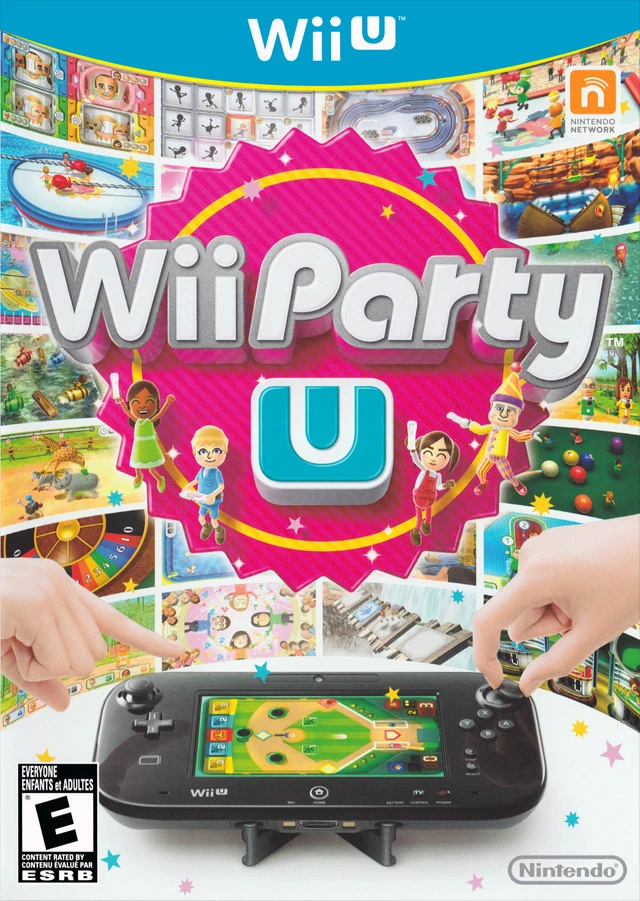
This might be a choice that might make you scratch your head. There wasn't much in the game. In fact, the game offered so little, it was available as a free download for pre-ordering Mario Kart 8. Why put this game on the list? Pretty much, Wii Party U is everything that Mario Party 10 (spoiler alert: this game appears later on the list) was not, but should have been. Although it had various game boards, the game boards felt more like game boards than Mario Party 10 (in fact, I would say the game boards reminded me of Mario Party 8). Wii Party U had more use of mini-games than Mario Party 10. Wii Party 8 fully utilized the game pad in order to "roll the dice" (that is, select the number of spaces to use) than Mario Party 10. Wii Party U even had some games which only utilized the game pad, making players face each other, just like Switch intends to do. Overall, Wii Party U was more of a Mario Party game than Mario Party 10! If I were to invite friends over to play Wii U, I would play Wii Party U with them over Mario Party 10 any day.

7) Splatoon
Nintendo must have found itself between a rock and a hard place. On one hand, it wanted to stay as the family friend gaming system it had been known to be over the years. On the other hand, Nintendo really wanted the attention of the hardcore gaming young adults, but they loved their bloody, gory shooter games way too much. Nintendo found the perfect compromise in paintball. Take the shooting of the shooter games, make it less bloody and gory with paint, and you get Splatoon. It's the perfect compromise. Besides, what adult doesn't like paintball, anyway? Go figure that this compromise was also a brand new idea, and not simply remarketing an old franchise. Splatoon is also one of the games that follows through with the online multiplayer Nintendo promised with the Wii U. Personally, what I like best about this game is that if shooters aren't your thing, you can be the guy on your team painting the battlefield with a paintbrush or paint roller. Not a challenging single player mode until the final boss, but the multiplayer is loads of fun.

6) Zombi U

Overall, Nintendo did not follow through with its promise that the Wii U would have up-to-date graphics, focus on online and attract 3rd party developers and hardcore gamers alike. One of the few games on the system that did make the Wii U look like it fulfilled the promise was Zombi U.  Zombi U had all of it. Leave it up to Nintendo teaming up with Ubisoft, my personal favorite 3rd party developer, to create such a game. This game was meant for adults, and I mean beside the M rating the game received from the ESRB. The game does a good job with the first person shooter mechanic. It would be very familiar to any FPS player. The graphics make blasting zombies into smithereens as real as it can possibly get. The survivor mode challenges the best of the best hardcore players to put their skills to the ultimate test. Even if they chose not to play survivor mode, I really like that idea that you play as a new player ever time you die, and that new player has to chase after your old, zombie character. If survivor mode is still not enough a challenge for those hardcore gamers, they can take it to multiplayer and challenge each other of like ability. On top of all this, the game utilize the Wii U gamepad well, especially using it as inventory bag. Even though this game eventually went to other consoles, it plays best on the Wii U.

5) Nintendoland
You might be scratching your hard at this choice, too. After all, this game is virtually a demo game. Well, I believe there are good demo games and bad demo games. Nintendoland is a good demo game. This game allows you to see all the things the Wii U can do, not just with the game pad, but the Wiimotes as well. What makes this demo game even more impressive is that it uses the famous Nintendo franchises, like Super Mario Bros., Yoshi's World, Legend of Zelda, Metroid and Pikmin to demo the Wii U's capability. It's almost like Nintendo is showing the fanboy all the potential Wii U games that could come out for the console. This game provides a wide array of game genres, which can be played as single player, cooperative multiplayer and competitive multiplayer. For the hardcore game, he has high scores and medals he can chase after. No wonder this game become a Nintendo Select, beside the fact it was the first game packaged with the Wii U. If you're only going to have 1 game for the Wii U, this is the game to have.

4) New Super Mario Bros. U / New Super Luigi U

I'm pairing these 2 games together because New Super Luigi U was more an expansion pack to New Super Mario Bros. U than it was a sequel. You also might be scratching your head on this one, especially after I gave it many criticisms earlier. Yes, at some points, it felt too easy. Yes, at some points, it lacked originality, especially compared to New Super Mario Bros. Wii. But that small difference between the Wii version and the Wii U version made all the difference. See, after playing the Wii U version, I went back and played the Wii version, for I played the bare minimum of the Wii version, and now I wanted to complete the game in full like I did for the Wii U version. Let me tell you, I noticed differences right away, and I missed the improvements of the Wii U version. At first, I didn't think the graphics would matter for a game that originally flourished in the 8-bit world, yet when I went from the 1080p of the New Super Mario Bros. U to the 480p of the New Super Mario Bros. Wii, I wanted to go back to the 1080p of the New Super Mario Bros. U! I noticed a big difference of the flight mechanic between the two games. There's a difference between the straight vertical flight of propeller hat versus the lofty glide the flying squirrel suit (you'll notice the different directly when you unlock the propeller hat in the bonus land of New Super Mario Bros. U. The final Bowser battle is much more challenging in the Wii U game than the Wii game. In the Wii game, after you grab the ax to cut the bridge, all the rest becomes a platforming  race. The Wii U version has Mario (and Luigi and the Toads if you're playing with friends) fighting Bowser directly head on. As for the other similarities and so-called "lack of originality," that's called nostalgia. It's supposed to remind you of the Super Mario Bros. games of old. The flying squirrel suit reminded me of the Tanooki suit of Super Mario Bros. 3. Then comes New Super Luigi U. While that had even less originality, if you see it as an expansion pack and not a sequel (like I do), it provides even more challenges, like racing a clock with less time on it. If you're still with Nintendo because you will like Mario 22 years later, you'll want this game.

3) Mario Party 10
You've probably gone from scratching your head to banging your head at this point, or at least giving yourself a serious facepalm. Didn't I just criticize it easier? Yes, yes I did. In fact, I would declare this the worst Mario Party game of the 10 games that have come out on the consoles. But this isn't a list of the best Mario Party games. This is a list of the best Wii U games. I'm not looking at what this game isn't, but what this game is. I'm not sure if you realized this, but this is the first Mario Party game that has 5 players. It's in the form of "Bowser Party" where 4 players using Wiimotes try beat Bowser, played by a player using the Wii U gamepad, to the finish line before Bowser takes all their points. Bowser Party utilizes each controller well, taking advantage of the capabilities of the Wiimotes and Wii U gamepad alike. If you don't like Bowser Party, but you liked Mario Party 9, Mario Party 10 brought it back in the form of what they call "Mario Party." If you don't like either Mario Party 9 or the Bowser Party in Mario Party 10, there's "Amiibo Party." Amiibo Party has the feel of the Mario Party games of old. You use your amiibo of choice as a game piece, moving it around the board, collecting coins, so you can collect  star. Yes, you have to pay extra for an amiibo so you can play this mode, but I liked it, for the amiibo really felt like the game piece of a board game. Besides, this is the only Mario Party games that came out for the Wii U, so if you want to have a Mario Party on the Wii U, this is your game.

2) Super Smash Bros. Wii U

Over the years, this game has received minor updates, and with each minor update, this game only got better. Without a doubt, I personally feel like this is the best Super Smash Bros. game yet. Yes, I do miss a story mode, but not that much. Yes, I do miss the Ice Climbers as a playable character, but I don't miss Snake (he felt out of place to me on Brawl). What made this game so great is that they had the Super Smash Bros. fanboys in mind. Probably the biggest evidence of such is that they knew how much the fanboys loved playing with the GameCube controllers that they added a GameCube controller port, and then they made brand new GameCube controllers to go with it. Super Smash Bros. Wii U best utilizes the amiibos, seeing that this game came from the idea of Nintendo figurines coming to life to fight each other. It's fun customizing them and leveling them up, although it would have been more fun to fight as them, not just alongside them or against them. This game had the fanboys in mind as it kept adding characters and levels in the form of DLC. I would highly recommend purchasing all the DLC characters and stages, even if together it cost the same as the game. This is one of the few games that actually shows off what the Wii U can do in terms of online multiplayer. It's fun fighting against people all over the world, and it became even more fun when later updates would allow you to talk to them. I easily logged over 100 hours on this game, and you will too because it has so many ways to smash. This is the best fighting game on the Wii U. This game alone should make you want to own the Wii U.

1) Mario Kart 8
This game underwent 4 major updates, so major that the Mario Kart 8 you're playing is version 4.0. Every update improved an already great game. Without a doubt, this is the best Mario Kart 8 out there. This 1st party game represents everything the Wii U is and should have been. Mario Kart 8 utilizes the 1080p graphics to fullest. This game will romance your eyeballs in the elegance of its design. This game is fun to single player, but it's more fun to play multiplayer, especially online multiplayer. Nothing beats shelling your Japanese opponent to beat them to the finish line for 1st place. Every CC is at the perfect level of easy, medium and hard, allowing the player to naturally enhance his skills. Even the Mario Kart fanboy, who thought that got 150cc down, will be surprised at the 200cc, where they actually have to use their brakes! As if the original edition of this game wasn't good enough, the game added DLC races, characters and karts to add even more to fun to the game. This game also gives you another reason to buy amiibos by providing suits for your Mii to wear. To me, it is no surprise that this game is the best selling Wii U game (besides the pre-ordering deal and packing with future Wii U consoles). It is the best racing game for the Wii U and the Mario Kart game out there. This game alone is a good reason to own a Wii U.

Just like the consoles of the past, the old Nintendo console end and the new Nintendo console will begin with the same Legend of Zelda game. Perhaps if Breath of the Wild came out earlier, it would have made the list. But no surprise to me, a lot of game announced for the Nintendo Switch are sequels to the games mentioned on this list. It's because that, even though the Wii U might have been an overall flop, these are the games that made it look like a success. I hope the sequels will bring more success to Switch than the Wii U ever had.

Sunday, June 15, 2014

E3 Review and Reaction

Now that E3 is over, let's take a look at what happens and what this means for gaming. Since I only previewed and predicted for the first party developers, let's keep this review and reaction to the system presentations. I will look at the positives and negatives of each presentation, then I wil award each a medal for their performance. To be dramatic, I'll start with bronze and end with gold.

NINTENDO

First, let me start with the disappointment that Nintendo decided not to make a presentation at E3, but rather chose to do a "digital event," the Nintendo equivilent of a podcast. I would understand if none of the major Nintendo leaders could make it, but that was not the case, for Miyamoto and Fils-Aime was there (Iwata could not make it due to health complications). Just think about how Konami does not have E3 press conferences, and how that reflects on their poor games. It's easy to get that same thought about Nintendo. On the same note, I'm disappointed on the length of Nintendo's digital event. Microsoft spent 90 minutes on XBox, which is about average to present a system. Sony spent 120 minutes on PlayStation, which did seem a little long, but can be excused because they had so much to present. Nintendo spent a mere 45 minutes on both the WiiU and 3DS. If the length of the presentation reflected how much they were working on, it would feel like Nintendo is doing half the work the other companies are doing. There was so much to talk about, but they spent so little talking about it. I will talk about this more later.

The digital event begins with a warning: content rated M. I'm thinking to myself, "Woah, Nintendo is starting off with a game rated M? That's so not like Nintendo. This is going to be awesome!" But it wasn't for a game. It was a short skit provided by Robot Chicken. I appreciated the laugh it gave me. I also appreciated that Nintendo allowed it to make fun of itself. But it did take out time to present game, which as I already said, was lacking, and I will say it again later.

When Nintendo got to presenting games, the first one was, of course, Super Smash Bros. I liked the humorous sketch of Iwata and Fils-Aime fighting to announce Miis as Super Smash Bros fighters, although I will admit that it seems like the Miis will be another version of Captain Falcon (Brawler), Link (swordsman) and Samus (shooter). I'm still kind of iffy about the Amiibo. At first, it seemed like a copycat of Skylanders and Disney Infinite, which to me feels like a cheap way to nickel and dime people. But the more I heard of its capabilities, the more I was convinced. The Amiibo give the Super Smash Bros. character RPG abilities and elements. This means that if two people chose Fox, for example, it would not be an equal matchup, as it would be picking the same computer chosen player, the characters might have different strengths and weaknesses. This would make fights a whole lot more interesting. If successful, I hope the WiiU can incoporate this into more games.

Next two more games were announced. First, Nintendo announced Yoshi's Wooly World with an interview and a trailer. Yoshi's Wooly World is pretty much a gameplay sequel of Kirby's Epic Yarn. Shortly after, Nintendo announced Captain Toad: Treasure Tracker, a game where Toad becomes Indiana Jones and hunts for treasure. Now even Toad has his own game. Watching both games, I found myself constantly saying, "That's cute" or "That's adorable." That's what these games were: cute and adorable. Perfect for kids and fanboys, but not for hardcore gamers.

I accurately did predict a new Zelda game, but it wasn't exactly what I was thinking. First, Nintendo announced Hyrule Warriors. This game viritually took Dynasty Warriors and put Legend of Zelda characters in it. Therefore, both Dynasty Warriors fans and Legend of Zelda fans will love this game. Then Nintendo got to real the Legend of Zelda game. We got to see Hyrule in 1080p, and it was beautiful. Miyamoto plans to embrace this beautiful landscape by making the most open world Legend of Zelda game yet. That's all we got. We didn't even get the game's name; it was referred to as "Legend of Zelda for WiiU." Later on, we were even told the name character may not even be Link. That's it. It's better than nothing, but I would have loved to hear more. They definitely better share more next year.

As for 3rd party development, we heard about Bayonetta 2, and that was it. Not even in the EA or Ubisoft conference was Nintendo really mentioned. Later on, Ubisoft admitted that they were only making Just Dance 2015 and Watchdogs for WiiU, and that was it for the year. Not even a Raymond game. As I said before, Nintendo needs to show 3rd party support if it wants to compete in this 8th generation console war. First, EA withdrew and now Ubisoft. If Nintendo looses Bayonetta, they are in trouble. They would have to continue on focusing on Nintendo fanboys by rebooting old franchises again. As for Bayonetta, it's nice that Nintendo will package the 2 Bayonetta games together, but since the first one came out on the Wii, and the WiiU has backward compatibility with the Wii, it's really unncessary.

Other games Nintendo showed off at its digital event were Mario Maker, Pokemon Omega Ruby & Alpha Sapphire and Splatoon. Mario Maker looks fun to both create and play, even though unofficial mods like it have been on PCs for years. Pokemon Omega Ruby & Alpha Sapphire kind of scares me. What I really want is my 3rd generation of Pokemon updated to most recent handheld, but it feels like Nintendo is adding too much with things like mega evolutions. Splatoon was an interesting take on a shooter game. Most importantly, it's child friendly, which is what Nintendo always shoots for (no pun intended). The show ended with announcing a new Super Smash charachter and plans for future games. That was it.

The worst part of this press conference is what didn't happen. Throughout the week, Nintendo announced more new games. Not that this was a problem; I see what they were doing. The problem was that they were some the best games, and they did not announce them at their key presentation. Some of these games were Professor Layton vs. Phoenix Wright, Mario Party 10 and Kirby and the Rainbow Curse. Did you know about these 3 games? You probably wouldn't unless you watched the whole thing. The sad part is these are possibly the best 3 games of the week, and Nintendo kept them hidden unless you watched every instance. Furthermore, Nintendo had a demo of a generic 1080p Star Fox game for the WiiU on the E3 showcase room. The only way the gamer would know about this either playing it at the expo or hearing a reporter report on it. A Star Fox for the WiiU was the most anticipated game. There definitely should have been more coverage of it.

All Nintendo had to do show they were keeping their promise that the first made with the WiiU: good graphics, good online play and good 3rd party development. The only thing seen was the good graphics, thanks to the future Legend of Zelda WiiU game. Online capabilites were left silent. Nintendo focused more on multiplayer on the same console than on different consoles online. What was really lacking was the 3rd party development. Not only did Nintendo not show off any 3rd party games, neither EA nor Ubisoft showed off the Nintendo WiiU. This digital event would not want anyone who does not have a WiiU to want to get a WiiU. Heck, it might even make someone who has WiiU regret they choose this system for their 8th generation console. It leaves them to ponder if they want to buy a new console or become a Nintendo fanboy.

+Positives+: Robot Chicken clips were funny, future plans of new Legend of Zelda game and Star Fox game for WiiU, good graphics displayed
-Negatives-: Best games weren't announced until afterward, no 3rd party backing, silent on online capibilites, short presentation, too many cute games
~Top 3 games~: Professor Layton vs. Phoenix Wright (3DS), Mario Party 10 (WiiU), Kirby and the Rainbow Curse (WiiU).
*Medal*: Bronze

Microsoft

Microsoft did exactly what I predicted. XBox did what Nintendo usually does: stick to their first party games. During the Microsoft press conference, we heard the most about Halo: Master Chief Collection, Halo 5: Guardians, Fable Legends and Forza Horizon 2. Even if they weren't faimilar franchises, Microsoft spent a lot of time on new first party games, like Sunset Overdrive, Below and Quantam Break. This demonstrates that XBox can continue making good games on their own. The 3rd party game Microsoft did present were the ones they knew had a huge fanbase on their system, like Call of Duty: Advance Warfare and Assassin's Creed: Unity. All these games looked legit. Sunset Overdrive felt like Duke Nukem meeting Left 4 Dead. Call of Duty: Advanced Warfare looked so real, I had to take a second look to see if it was really a video game or a movie. Fable Legends made it clear that it abandoned the Kinect gameplay used in Fable: The Journey for going to back to the more true gameplay to the series. The most impressive had to be the Halo: Master Chief Collection. It has the 4 original, mainline games (this makes sense why Spartan Assualt was the Free Game with Gold on Xbox One. Halo 2 got the full update to XBox One graphics, but players can still play on the original graphics too if they want to go old school. For the lover of gamescore achievement points, a player can get 1000 points for each game, meaning they can earn a total of 4000 points. All these games, especially Halo: Master Chief Collection, showed that XBox knew its fanbase.

This did not mean Microsoft's press conference was perfect. It was far from it. The big one was the lack of Kinect. Only two games were announced for Kinect: Fantasia: Music Evolved and Dance Central Spotlight. And I emphasize that they were merely annouced. Neither gameplay nor a cinematic trailer was shown. Furthermore, neither the EA press conference nor the Ubisoft press conference really talked about Kinect either. All of this, combined with the "new" XBox system without Kinect, tells me that Kinect is on its way out the door. On another note, something I did not like was there was too much emphasis on co-op play. It seemed like XBox mentioned it with every game. Clearly XBox doesn't know its fanbase well enough to know XBox gamers don't have friends and therefore prefer single player :-P

Microsoft didn't do well enough to make up from all those years of mistakes to climb back to the top, but they did enough to not finish on the bottom and begin their climb back to the top.

+Positives+: Stuck to old first party franchises, introduced new first party games, stuck to third party franchises they knew were popular
-Negative-: Too much co-op play, not enough Kinect
~Top 3 games~: Halo: Master Chief Collection, Fable Legends, Forza Horizon 2.
*Medal*: Silver

Sony

Sony begin announcing a new color for the PlayStation: glacier white. I think I prefer the black color instead. That wasn't Sony's only new hardware introduced. You would think Sony would talk about Project Morpheus, but they did not, for they had not made more movements forward on it. That was a smart move on their part. They talked more about the PlayStation 4 camera, and how it has helped the improve the gameplay experience, although not requiring it, make a cheap shot at XBox One one more time. Then Sony moved on to more hardware improvements. Sony announced that anyone who has a Sony TV will have access to the PlayStation digital game library. PlayStation also announced a device that will allow a player to play PlayStation 4 on other TVs in the house. Most people weren't expecting hardware announcements years after the new consoles came out, but Sony shocked everyone by announcing so much hardware. The only thing they did not talk about was the PS4 and PS Vita bundle, which I would have loved to hear on how those two worked together. The other hardware left out was Move. Sony should have mentioned how good the new PlayStation camera was that it does not need Move.

What good would all this hardware be without software. Sony did a good job displaying the full line up of video games they had available. PlayStation gave equal time between 1st party games and 3rd party games, showing that PlayStation was dedicated to both their franchises and other franchises. Sony also demonstrated it targeted both hardcore gamers and casual gamers, without sacrificing one for the other. What better demonstration was demonstrating everything from Little Big Planet 3 to Uncharted 4: A Thief's End. If all these 1st party and 3rd party games weren't enough, Sony announced plans to make digital downloads of old PlayStation games from previous generations' consoles, as well as opening up a huge library for indie game developers to upload their games for download. Unlike Nintendo, Sony made its fans proud to own a PlayStation 4. But the best part is that the online digital libary is also available for PlayStation 3. Unlike XBox, Sony demonstrated that it was still loyal to the PlayStation 3 and those who haven't updated from a PS3 to a PS4. This alone should be clear why Sony won this E3.

+Positives+: New hardware, balance between 1st party and 3rd party development, huge game library, still loyal to the PS3
-Negatives-: Lack of Move, no mention of PS4/PSVita bundle, little time on PS Vita games
~Top 3 Games~: Little Big Planet 3, Uncharted 4: A Thiefs End, Grand Theft Auto V.
*Medal*: Gold

Friday, June 7, 2013

E3 2013: Preview & Predictions

I know I keep saying I want to reboot this blog, and I know I keep putting it off. But I am consistant with my E3 reviews, so I'm going to give another E3 Preview and make some predictions along the way. While I loving watching E3 every year, I have to say this year there is slightly less thrill. What makes that so shocking is that this year 2 new consoles are being introduced this year. I can't say I'm too pleased with the next generation systems. They either seem to be copying a system, or some kind of gimmick, with nothing original. But enough about that. Let's look at the 3 next generation systems as they will be the headliners for each each hardware company's press conference. Let's go in order of console annoucement.

Nintendo WiiU: The Nintendo WiiU was the first on the scene, announced on E3 2011 and released in 2012. It finally got up to 1080p graphics. It finally had a controller with buttons that a hardcore gamer would appreciate. It finally had a bigger hard drive. It finally had 3rd party developers supporting it. It finally had online capabilities.  Finally, it seemed like it caught up to its rivals the XBox360 and PS3. But the question would be, "Would it fall behind when Microsoft and Sony caught up?" I don't think it has. Nintendo has put a touchscreen on its controller, and Microsoft and Sony followed with their own touchscreen/touchpad. Nintendo tied Microsoft and Sony with graphics, but neither Microsoft nor Sony really advanced their systems any further. The big advantage Nintedo gave itself was giving the WiiU backwards compability with Wii games. There is none for the GameCube games, but Nintendo made up with that by promising Game Cube games on the Virtual Console. Speaking of Viritual Console, all the Wiiware games and Virtual Consoles can be transferred from Wii to WiiU. Speaking of transferring, your data can be transferred from Wii to WiiU. Both backward compatibility and data transfer are unique to to the WiiU, and it could be what sets the WiiU apart...and above. The games will help set up the WiiU to be the number one system. The top 5 games will be the Super Smash Bros for the WiiU, Mario Kart for the WiiU, the new Super Mario Bros. game, the new Pikmin game, and the Legend of Zelda reboots. These might seem like a cheesy tatic, a ploy to reel in the Nintendo fanboys, but it will work. It will keep Nintendo alive for another year, and it might even put Nintendo up top for 2013.

Sony PlayStation 4: The PlayStation 4 was announced in February 2013, although many people suspected it coming even sooner than that. Naturally, it was named the Play Station 4, or PS4, because it was the fourth line after the PS1, PS2 and PS3. With a lack of a creative, original name comes lack of a creative, original hardware. The PlayStation 4 controller has a touchpad in the middle of its controller, like the WiiU has touchscreen. The PS4 will be getting a smartphone app, just like Microsoft has Smart Glass for its XBox. The new Play Station interface looks much like the XBox 360 dashboard. Its new graphics are only slightly better than the last system. So far nothing original. The PlayStation 4 has no backwards compatability with any PS1, PS2 or PS3, but Play Station is trying to fix the problem with backwards compatibility by putting its old games library on the PlayStation Network to download. This will hopefully solves future backward compatability problems, as when a new system comes out, the downloaded games will simply transfer. If there is any backwards compatability (I use that term loosely), it's the motion controls. The Move controllers used on the PS3 will work on the PS4. So there's no need for PlayStation fans to buy new motion controllers for their motion control gaming. The PS4 has solved a lot of problems that the PS3 had. Blu-Ray might have given amazing graphics, but it was always slow to load. Not only has Sony given the PlayStation 4 a faster Blu-Ray player, it allows for the game to load. While the PlayStation 4 has its faults in comparison to other gaming systems of this generation, it has greatly improved to truly indeed be the best PlayStation so far. How's Sony going to convice its fans of this? It has to focus on  the games unique to the PlayStation 4. Unlike Nintendo, Sony doesn't have to rely on its all its old franchises like SlyCooper or God of War, but it does have to focus on other unique games and makes these games look so good that it will look worth buying a PS4 for these games alone. Such games are Infamous: Second Son, Killzone: Shadow Fall and Driveclub. Watch for the PlayStation 4 press conference to focus on those games.

Microsoft XBox One: Microsoft was the last to step on the stage, introducing the XBox One on May 21, 2013, as a teaser to E3. It's odd to think that Microsoft named their 3rd XBox "One," but they did so to make it their all-in-ONE entertainment system. Surely Microsoft still seems jealous that Nintendo can reach use a broad range of people, so Microsoft focuses on a broad range of people to use their system. Already, just like Nintendo, XBox incorporates smart phones and tablets for a touch screen, like the WiiU's game pad already built in. Microsoft was pretty impressed on how the WiiU has TV controls built into the WiiU, so Microsoft decided to up that by putting TV into the XBox, allowing to stream through the XBox. You can even control the TV with your voice. Like the Wii has motion sensing, XBox One has kept the Kinect. This Kinect sensor is truly a 2.0 update. Whereas the first Kinect sensor could only read 2 bodies at one, the new Kinect sensor can read up to 6 people. The second Kinect sensor can also read people better close up and far away. The camera is so good, it can see players in the dark. The camera is so good, it can detect heart rate. XBox One is banking on the Kinect... almost too much. The XBox is banking on Kinect so much that the Kinect sensor is required for the system to work. This upset a lot of XBox fans, who prefer using the controller over Kinect. XBox flaunts its online capabilities with XBox Live, which probably the most popular online gaming server. It allows players to record their gameplay and share it on social media websites. Once again, XBox One might be depending on their online aspect too much. The XBox One is required to be online at least once a day for the system to work properly. If anyone does not have internet access, this might be a problem for them. But the biggest problem that XBox One has created for itself is no backwards compatability for XBox or XBox360 games. They don't even have plans to upload these old games onto the Live Arcade, like PlayStation is doing. The best they are doing is making some of their first XBox One games their last XBox360 games to give the XBox360 a final farewell. While the hardware features are pretty cool, as a gamer, there's nothing that makes me want to buy this. To buy this, I feel the XBox One will turn my plain old TV into a smart TV, but that's about it. To get me to buy this system, XBox One is going to give me games I want to buy. I expect XBox can do this with Forza Motorsport 5, Quantam Break and Ryse. Look out for those games.

Let the 8th round of console wars begin! :)