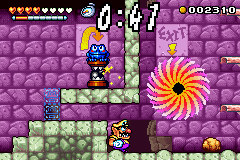
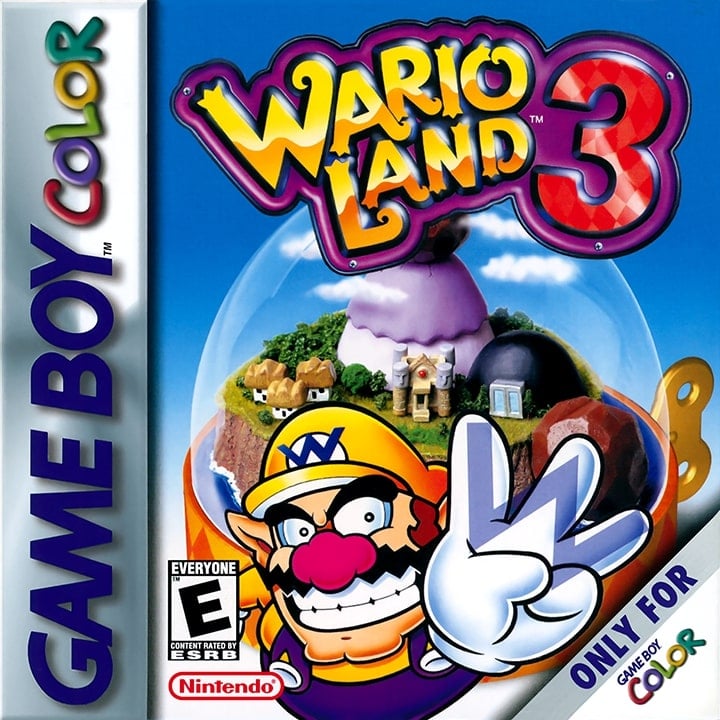
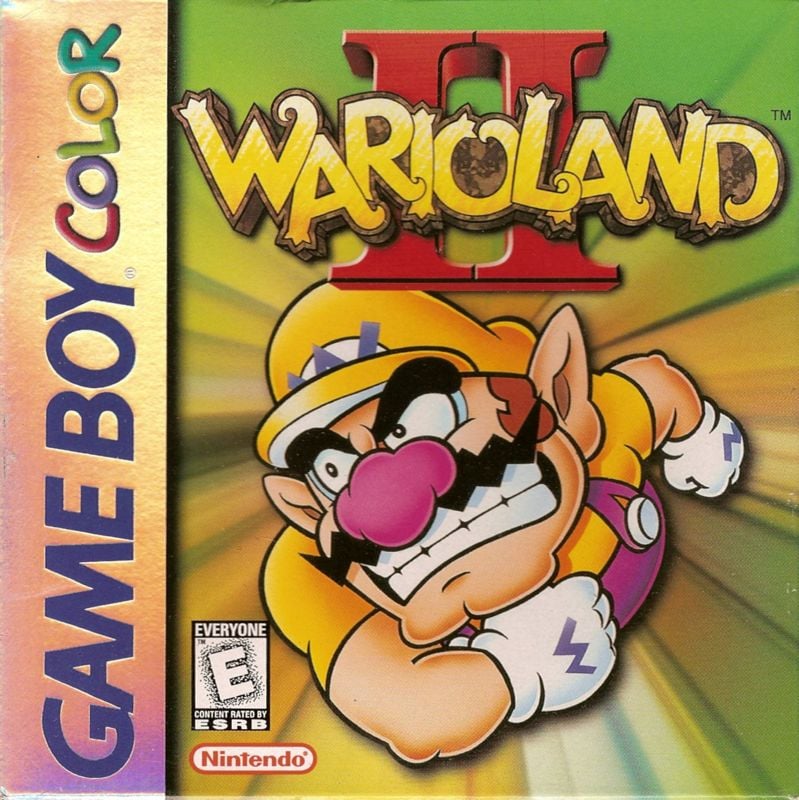
Showing posts with label video games. Show all posts

Monday, August 10, 2026

Mario Kart World


Mario Kart World

Developer: Nintendo, Monolith Soft, 1-Up Studio, Bandai Namco
Publisher: Nintendo
Original System: Switch 2
System Played On: Switch 2
Rating: 2 stars 

For my 3rd game of The Year of Nintendo Switch 2, I played Mario Kart World! For the Grand Prix Cups, my goal was to perform the same as I did in Mario Kart 8 Deluxe, and I did! I got triple-star gold all 50cc & 100cc Grand Prix Cups, and I got gold on all 150cc & Mirror Grand Prix Cups. On top of that, I got gold all the knockout cups (I didn't care about stars for that one) on all CCs, I found 10 of each of the Peach Medallions, P-Switch Missions and Question Panels, and I even participated in all the time trials (not once beating a ghost). And I did it all in 35 gameplay hours over 3 1/3 months.

Whatever gameplay mode the gamer chooses to play, the player will first have to choose the driver. For Mario Kart World, Nintendo went for a more cartoony aesthetic for the characters. Most Nintendo gamers welcomed this change in aesthetic. Most Nintendo play thought the previous 3D renders of their beloved Nintendo characters felt somewhere between boring, drab, plain, uninspired and uninteresting. To them, the cartoony aesthetic made the characters look more interesting, more appealing and more fun. To me, I don't see the big deal. If anything, I actually preferred the previous 3D renders, for their felt more realistic while at the same time not hyper-photo-realistic. It's nothing worth fighting over, though. If anything, I can appreciate how the aesthetic in Mario Kart World now matches the aesthetic from their "home games" in their "home franchises." Mario, Luigi, Princess Peach, Princess Daisy, Toad, Toadette and Yoshi all look like they do in Super Mario Wonder. Donkey Kong look like he came right from Donkey Kong Bonanza.

Let's talk about the roster itself, though. In order to converse about the Mario Kart World roster, a discussion over the Mario Kart 8 Deluxe must happen first. In the opinion of many Nintendo fans, especially the Mario Kart fans, Mario Kart 8 Deluxe had the perfect driver roster. Including DLC characters but not including color variants (for Shy Guys and Yoshis), Mario Kart 8 Deluxe had 48 drivers, the most racers ever in a Mario Kart game (not including the mobile game Mario Kart Tour). Not only is the quantity impressive, the quality is also impressive. Instead of limiting themselves to Super Mario characters, the Mario Kart development team include drivers from other Nintendo franchises. As a result, Mario Kart 8 Deluxe included Link from The Legend of Zelda, Inklings (Boy and Girl) from Splatoon, and Villager (Boy and Girl) & Isabelle from Animal Crossing. Nintendo fans, especially Mario Kart fans, welcomed this inclusion, and it got them excited, for the sky became the limit on who could appear in a Mario Kart game. All of a sudden, the hypothetical, theoretical, future "Mario Kart 9" received the nickname from fans "Super Kart Bros.," for they anticipated that the next Mario Kart game would have a roster similar to Super Smash Bros., encompassing characters from all of Nintendo's franchises. Mario Kart World has a roster of 50 characters, making it the largest Mario Kart roster to date, so Mario Kart World absolutely has quantity going for it. In terms of quality, however, Mario Kart World definitely does not do its roster any favors. Of the 50 drivers in Mario Kart World, only 24 of them can be describe as main characters. Furthermore, all 24 main characters come from the Super Mario series, leaving out other Nintendo franchises. In comparison to the Mario Kart 8 Deluxe roster, this feels like a setback. The other 26 drivers are best described as "NPCs" from the Super Mario series, of which most, if not all, are enemies in Super Mario games. Thanks to this game, I have come to discover that many of these enemy NPCs have boring, common, drab, uninspired and uninteresting names. Such NPC enemies include Cow, Penguin, Snowman, Dolphin and Crab. Come on, at least name the Cow "Moo Moo Cow" or even simpler, "Moo Moo," after the Moo Moo Meadows from which it comes. I know this may sound like a nitpick, but all the main characters are tetrapods, meaning they have 2 arms and legs, making it a simple and sensible explanation on how they can drive a kart. A majority, if not most, of the NPC racers are not tetrapods, begging the question on how they drive a kart. How does Goomba drive with no hands? How does Snowman drive with no feet? Yes, I know in real life, cars can have alternative way to drive them for the sake of the handicapped community, but none of the karts show these modifications. Just like with the Mario Party games, I believe that the best Mario Kart racers are the humanoid characters. If that seems too limiting, then include characters from other Nintendo franchises, like Mario Kart 8 Deluxe did. The 26 NPC racers feel like roster padding, which becomes even more evident when it comes to the costumes.

Now let's talk about the costumes. Early on, even from the onset of the initial reveal trailer, Nintendo put a big emphasis on advertising costumes for the Mario Kart World drivers. Indeed, Mario Kart World has over a hundred costumes, 103 to be exact. Costumes are unlocked by eating Dash Food, Mario Kart World's version of a fast food bag. The jury is still out on how to acquire certain costumes. Based off my observations, I have concluded that it all comes down to eating certain foods in certain locations. For example, Wario eating a kabob in the desert unlocks the Sultan Wario costume. I have to observe and conclude because the game is never straightforward with how to obtain costumes. This is a completionist's nightmare! In my 35 gameplay hours, which was definitely not a completionist run, I think most, if not every, character had all but 1 costume unlocked because I could not figure out how to unlock that last costume. Fortunately, costumes can be acquired in both races and free roam. Unfortunately, both options will result in gamers revisiting courses over and over again, just in the hopes of finding a new driver + food + location = costume combination! Thus, the better option is free roam. Fortunately for the completionist, and unfortunately for everybody else, only the 24 main characters get a costume. The 26 NPC characters receive a simple boost from eating a Dash Food. Whether a casual gamer, a core gamer, or even a completionist gamers, all gamers are now actively discouraged from playing with an NPC driver, unless the player has some kind of fanboy/fangirl infatuation with the NPC racer of choice, for they will never see their character change costumes. If Mario Kart World really wanted to hype up the costumes, as it did in the advertising, the roster should have consisted of merely the 24 main characters. Yes, it would have felt underwhelming in comparison to recent past Mario Kart games, but now, with a majority of the roster unable to wear costumes, the roster does really feel like padding. On top of that, main character drivers can range in quantity of costumes, with Mario leading with 10 (including his plain original), and Donkey Kong and Paulina tied for dead last with 2 (including plain original). Way to get more gamers to play with Mario, a mid-tier character! Now there is a [conspiracy] theory going around that Donkey Kong and Paulina have the least because Nintendo wanted to hold off on their costumes because they would be spoilers to Donkey Kong Bananza, so they will be released in a DLC package at a later date. Gosh, I hope the [conspiracy] theory is right. Again, the game is encouraging gamers to play with driver with more costumes, while discouraging players to play with racers with less costumes, which should not be the case. Make all drivers have the same number of costumes! Heck, make all racers have the same exact costumes! I know this might sound like a nitpick, but to make matters worse, every single costume has its own slot on the character select screen. This makes the character select screen so convoluted! The game does provide a sorting option, but this doesn't make things better, but rather, it actually feels more convoluted! Mario Kart World should have taken a page from the Shy Guy and Yoshi color variants on Mario Kart 8 Deluxe - choose your character, and then a pop-up screen to choose the character's costume. That or at least make costume choice a second screen after character selection.

OK, the gamer has now chosen the driver and the costume, and now it comes time to choose the kart. Again, understanding criticisms of choosing the kart requires a comparison to Mario Kart 8 Deluxe. In Mario Kart 8 Deluxe, choosing the kart meant choosing the kart's body, the kart's wheels and the kart's glider. In Mario Kart World, choosing the kart means choosing the kart. In this game, there is no body, wheels and glider customization. Now, to be fair, in all honesty, changing up gliders in Mario Kart 8 Deluxe did little to nothing stats-wise, so the choice of glider was more of a choice of aesthetic. Therefore, I understand why the developers dropped the glider from kart customization. Gliding still exists in Mario Kart World, but now, the kart simply sprouts wings when gliding. If developers would have simply dropped the glider and kept everything else the same from Mario Kart 8 Deluxe to Mario Kart World, kart customization would have been 2 choices: kart body and kart wheels. When it comes down to 2 choices, it doesn't really feel like a choice. Therefore, I understand why the developer dropped the wheel customization, too. Reducing the choice to just character and kart combinations also does indeed simplify things, especially for the casual gamer. Still, reducing kart customization feels like step back in comparison to Mario Kart 8 Deluxe, or even Mario Kart 7 on the 3DS, for that matter. Heck, it even feels a step back in comparison to The Super Mario Bros. Movie, which highlights kart customization it! If Nintendo keeps things up, imagine having to explain to the younger generation that back in the day, a person could customize the kart on Mario Kart! The better solution would have been to make the glider actually have an impact on stats.

Finally, after choosing a character, costume and kart, the player can finally race! The first choice the game presents to the gamer is the classic Grand Prix. As classic as Grand Prix might be, this Grand Prix is far from old fashion. See, the reason this entry in the series is called Mario Kart World is because all the courses exist together, united in a single world. Therefore, instead of a loading screen transporting the driver from a course to another course, the racer now has to race from a course to another course. As a result, the 1st of 4 Grand Prix races is the traditional 3 laps around the course. For races 2 to 4, the race to finish line consists of racing to the course AND racing around the course. Typically, "lap 1" is the 1st half of the highway to the next course, "lap 2" is the 2nd half of the highway to the next course, and "lap 3" is an actual lap around the course. This new take to Grand Prix courses causes problems. See, part of the genius of 3 laps around a course is that you learn the course with each lap, so hopefully, by lap 3, you have mastered the course enough to win 1st place. If you don't, then you restart the course for another 3 laps to learn the course. With Super Mario Kart's new take on Grand Prix racing, the gamer has only 1 lap to learn the course. In reality, the player isn't really learning the course. It's more like the gamer is guessing at the course. This new take on Grand Prix races makes the Grand Prix less about skill and more about luck. That' s good news for the casual gamer and bad news for the hardcore gamer. I'm not knocking on this idea of racing to the course as well as racing the actual course itself. I just think there is a better way to implement it. The best way I could think of implementing it was make racing to the course as like a qualifying lap. In the traditional Mario Kart Grand Prix, the gamer starts off the 1st of 4 Grand Prix races in last place. For races 2 to 4, the player starts in whatever position he or she finished the last race. Therefore, with this method, the gamer too easily could finish the 1st race in 1st place, and then just hold that 1st place for races 2 to 4 because he or she started the race in 1st place. With my new implementation of the highways to the courses, players have to earn their pole position to start off the course, instead of just receiving it based off the prior course. Another noticeable change to the Grand Prix is the additional racers. Grand Prix now has 24 racers, doubling the amount racers, the first racer number increase since Mario Kart Wii increased the racers from 8 to 12. Listen, when Mario Kart Wii increased the racers from 8 to 12, I was skeptical if 12 racers would actually fit or if it would become too crowded. After 88 hours and 48 minutes over 56 gameplay sessions, however, Mario Kart Wii had me convinced that 12 racers was the right move going forward for the franchise. Indeed, Mario Kart 8 and its enhanced port Mario Kart 8 Deluxe continued to prove that theory true. After about 35 gameplay hours over the span of 3 1/3 months, Mario Kart World has yet to prove that increasing for 12 races to 24 racers was the right move. I am not convinced. If anything, I am quite the opposite. If anything, 24 racers once again feel like padding. A decent player starting the 1st race in 24th will pass the back 12 racers quite quickly, and the player will never see them again for the entire Grand Prix. Speaking of padding, I assume that that 24-racer Grand Prix is part of the reason Mario Kart World had to have 50 drivers, but again, this roster of 50 should have been well-thought of Nintendo main characters, not average NPCs. I wish Mario Kart World would have stuck with 12 racers. One last change I noticed, which may sound like a nitpick. Starting with Mario Kart Super Circuit and improved with Mario Kart DS, past Mario Kart installments would separate the retro courses from the new courses with retro cups. In Mario Kart World, since all the courses exist in a single, united world, Mario Kart World does not separate new courses from retro courses in retro cups. Retro courses will be integrated into the 8 cups, with some having multiple and others having none. This integration makes it hard to notice and easy to miss retro courses, like Ghost Valley, for example On the flip side, some are easy to notice and hard to miss, like Mario Circuit.

New to Mario Kart World, Knockout Tour provides an alternative to the traditional Grand Prix. Knockout Tour contains of 6 stretches of race track, consisting of both race courses and connecting highway, with 6 checkpoints interwoven in there. At each checkpoint, there last 4 drivers are eliminated, until 4 racers remain, who will race for 1st place. Again, I imagine Knockout Tour is the reason that races now increased to 24 drivers, which in turn is the reason the roster had to at least 50 racers, but once again, the roster should have been well-thought of main characters, instead of mediocre NPCs. Still, I think Knockout Tour could have worked with just 12 characters. Either split the Knockout Tour into thirds instead of sixths to keep knocking out 4 drivers at every checkpoint or keep the Knockout Tour 6 stretches but eliminate 2 racers per checkpoint (maybe eliminate a stretch to keep the final stretch a final 4). Either way, I wish Mario Kart World would have stuck with 12 racers. The bigger problem, however, is ultimately, Knockout Tour is not fun. See, if you think about it, Knockout Tour is 1 big lap, a sprint to the finish line. It doesn't matter how many checkpoints the driver passes through in 1st place; all that matter is what place the racer is in for that last checkpoint. I can't count the number of times I went through checkpoints 1 to 5 in 1st place, and then in the last stretch of the 6th part to get bombarded with items or cut off by from an unknown shortcut, and end up in 2nd, 3rd, or even 4th. True, someone can argue, "Well, the same is true for a Grand Prix. It doesn't matter if you finish the 1st or 2nd lap in 1st place place; what place you finish the final lap is your final standing." To that argument, I say, go back to my point about learning the race course. With only 1 giant lap, it takes time to learn it. Add on top of that the time it takes to race 1 huge lap. Getting gold on all Knockout Tours on all CCs took me a while. That's why I didn't care about star ratings. I also didn't care about star ratings because the only way to get triple stars is by passing through all checkpoints in 1st place. A run could be ruined by passing through the first couple or few checkpoints in 1st, only for the next checkpoint to be in anything but 1st. At least the star rating gives incentive to try to be in 1st place for the checkpoints in between start and finish. All in all, Knockout Tour left me with a feeling of frustration over a feeling of enjoyment. In fact, after finally finishing all Knockout Tours in 1st place, out of sheer spontaneous emotion, I shouted, "Never again!"

Time Trials is the only part of Maio Kart World that gives a traditional Mario Kart experience. The gamer races their driver around a course for 3 laps. The course itself is the only obstacles, with no other drivers to be seen. The only item the player has for his or her racer is 3 mushrooms, which a good player will utilize once per lap where the racer would benefit from it the most, most likely for a shortcut. The developers' ghost still provide the most challenge for Time Trials. Seriously, only once did I come remotely short to beat a developer's ghost, losing by only 0.03 seconds. Mario Kart World once again allows gamers to upload their best times as a ghost, so racers all over the world can compete, something that has been in the series since Mario Kart DS. Ironically, I would recommend to gamers to begin Mario Kart World in this mode, for this mode allows the player to learn the courses the best.

Someone might wonder why I know so much about Time Trials when I almost never play Time Trials. Well, I got triple-star gold all 50cc & 100cc Grand Prix Cups, I got gold on all 150cc Grand Prix Cups, and then I got gold all the Knockout Tours, yet I had not unlocked Mirror Mode. I figured that perhaps participating in all Time Trials against the developers' ghosts would unlock Mirror Mode. Nope, not the right answer. I was baffled. With no hint within the game, I went online to the internet. Turns out that to unlock Mirror Mode, the gamer has to collect 10 Peach Medallions, drive over10 ? Panels, and finish 10 P-Switch Missions. Therefore, without further ado, let's talk about Free Roam. Free Roam is the ultimate casual mode on Mario Kart World. Free Roam allows players to just aimlessly wander about this world of race tracks Mario Kart World has invented. This feature is here probably in part for a practical use for the Nintendo Switch 2's new voice chat feature. If aimlessly wandering about sounds too boring to you, Mario Kart World provides 3 things somebody can do in Free Roam: Peach Medallions, ? Panels and P-Switches. Peach Medallions and ? Panels are similar in the fact that both are a matter of just reaching a certain spot. If any difference, ? Panel are more hidden, whereas Peach Medallions are out in the open but a matter of figuring out how to get to it (most often high up). The P-Switches are a test of driving skill, reminiscent of the missions in Mario Kart DS. The driving skills that the P-Switch test will vary in difficulty. In all the honestly, the gamer will end up wandering around Free Roam looking for Peach Medallions, ? Panels and P-Switches, chalking up finding them to accident, coincidence or mistake. Later on, Mario Kart World would receive an update, which would include a map to help discover and record Peach Medallions, ? Panels and P-Switches, but this map gives little to no additional aid. Players of Mario Kart World would best log online to the internet for a better map (I personally chose IGN). If collecting Peach Medallions, driving over ? Panels, and finishing P-Switch Missions to just unlock Mirror Mode, gamers will be looking to do just the first 4 he or she runs into, or the first 4 easiest ones, skipping over any deemed too hard. Oh, and going back to unlocking Mirror Mode, once done collecting 10 Peach Medallions, driving over10 ? Panels, and finishing 10 P-Switch Missions, the player still needs to replay the Special Cup Grand Prix to finally unlock Mirror Mode for Grand Prix and Knockout Tour. At the end of the Special Cup, a custscene will show how to unlock Mirror Mode for Free Roam, which is driving through the Peach stained glass at Peach Castle. This is the most complex way to unlock Mirror Mode, and truthfully, it's overly convoluted. At most, it should all gold trophies on 150cc, and at least, it should all trophies (top 3 finish) on 150cc. That's the way it's been done in the past.

VS Race feels simply like Build-Your-Own Grand Prix. VS Race lets the gamer customize engine class, items possible, computer difficulty (if choosing any CPUs in the first place) and number of races (from 3 to 32!). When it comes to choosing courses, since Mario Kart World's emphasis is on the open world nature, the player actually chooses 2 courses. The 1st lap is the 1st course, the last lap is the 2nd course, and the highway connecting the 2 courses is the middle lap. If the gamer chooses "open" in the course settings, he or she will have to choose 2 courses after every race, and repeat cycle from how many races the gamer chose at the beginning. If the player chooses "connected" in the course settings, the player will simply choose a single new course after every race, and the next race consists of a lap around the old course, the highway to the new course, and a lap around the new course. If choosing "random" in course setting, the computer will randomly select "open" or "connected" and which adjacent courses on its own accord. Even VS Race is not an escape from the open world of Mario Kart World to a more traditional Mario Kart experience!

Battle Mode is not as fleshed out as it has been in previous Mario Kart installments, but what it has is pretty solid. Mario Kart World has 3 Battles to choose from: Balloon Battle, Coin Runners and Bob-Omb Blast. Balloon Battle may be the oldest, but Mario Kart World's version takes the modern take. Instead of last man standing, like the older Mario Kart games, Mario Kart World scores on how many balloons popped, and if the driver's balloons all pop, the score is nullified, and the driver is eliminated. Coin Runners is exactly what it sounds like - the one with the most coins at the end wins. Bob-Omb Blast is very similar to Balloon Battle, but the only item is Bob-Ombs. Oh, and by the way, Bob-Omb Blast was a free update to the game, so there is hope for future Battle Modes, especially beloved Battle modes in prior games, in either free updates or paid DLC. Of course, once again, since the open world nature is at the forefront of Mario Kart World, so the battle areas are simpley fenced off areas of the open world map, most often centering around a course. This works better than the original Mario Kart 8 on the Wii U. That did not work because courses were either linear or circular, meaning it could take a while to run into an opponent, especially considering how hard it was to turn around on these courses. Still, I would have preferred designated battle arenas on the world map. Battle Mode in Mario Kart World only does that once, and it a retro battle arena, too - Big Donut!

Quite possibly, the greatest strength of Mario Kart World is its soundtrack! Mario Kart World's soundtrack has 277 songs! Of the 277 songs, 108 songs are from the Mario Kart franchise, 102 songs are from the Super Mario series, 10 are from the Yoshi games, 2 from Mario Paint, and 1 from Donkey Kong Country, Flipnote Studio, Luigi's Mansion, Wario Land (1): Super Mario Land 3 and WarioWare, Inc. The songs can either be the original as-is or a modern remix. The purpose of this huge soundtrack is probably to keep the music fresh on long gameplays in Free Roam. The irony is that the game's greatest strength might be also its work weakness. The game itself in no way advertises, explains or promote this. The only way to catch on to this is to just be in the know. The only other way is to pause the game, whatever game mode you might be in, and the pause screen will have the track title and the game from which it came. It could not have been that hard for a pop-up in the corner of the screen with this information with every track change. Heck, even Mario Kart Live: Home Circuit does this when changing the radio stations!

As I draw closer to my conclusion, let me make some last random observations before drawing on my conclusion. Mario Kart World added a new mechanic allowing karts to grind rails in order to gain small boosts. This mechanic was obviously implemented to combat Fire Hopping and Soft Drifting, which means a buff for casual gamers and a nerf for hardcore gamers. At first, I worried that adding this new game mechanic would require a tutorial, but it did not, for it was that smoothly implemented. I also come to realize that grinding rails was not worth it, for the traditional drifting boosted better and controlled better. I miss the fact the 1st place indicator on the HUD was gold, the 2nd place indicator was silver, and 3rd place was bronze, for that is the medals commonly associated with those places. Now, instead, Mario  Kart World gives random color gradients. There are changes in items, with some additions, some subtractions, and some changes, but none of them trigger a strong emotional response. At most, I will say Mario Kart World does slightly improve on the items given to 1st place. Decal stickers add little to no value, but I can appreciate some of the puns and wordplay used, combining the Super Mario universe with the real world. Mario Kart World has these Ride Trucks, which can be hijacked to drive with a speed boost. They are very underutilized, but when one can be found and used, it does give a feeling of a power trip.

In closing, I will conclude the same way a Price Is Right game concludes - with the actual retail price. The actual retail price of Super Mario World is $79.99, or simply put, $80.  Needless to say, Nintendo fans felt sticker shock when Nintendo revealed the price. I get why it is $80. With 50 drivers, 103 costumes, 40 vehicles, 1,056 stickers, 30 courses, a single world to tie together all 30 courses, 277 songs and a brand-new gameplay mode, Mario Kart World needed a large development team. In fact, best estimates count about 300 developers! To pay 300 developers a comfortable wage requires hiking up the price. Therefore, in terms of all the designers, programmers and artists needed for all the features available in Mario Kart World, yes, I get why Mario Kart World is $80. In terms of fun factor and desire to play the game, however, I don't get it. Despite its massive scope and undeniable ambition, Mario Kart World ultimately left me conflicted. I appreciate the sheer volume of content—50 drivers, over 100 costumes, dozens of vehicles, a sprawling interconnected world, and a gigantic soundtrack—but quantity alone couldn’t mask the game’s deeper issues. The bloated roster, the uneven costume system, the stripped‑down kart customization, the luck‑heavy Grand Prix structure, and the frustrating Knockout Tour all chipped away at the fun I expect from a Mario Kart title. Even unlocking core features like Mirror Mode felt needlessly convoluted. In brutal honesty, if family or friends came over to my home, and said to me that they wanted to play Mario Kart, I'm taking out Mario Kart 8 Deluxe, thanks to the backwards compatibility of the Switch 2, not Mario Kart World. Up to this point, I've always felt that Mario Kart games have overall gotten progressively better, so much so that every new entry was my new favorite game in the series. For the first time, I can't say that. For the first time, the newest entry in the franchise is my least favorite game in the franchise. I can't say and I won't say it's a step backwards, but I rather play the frustratingly hard Super Mario Kart than Mario Kart World. Mario Kart 8 Deluxe is still my favorite Mario Kart game, and that had only a $60 MSRP. If Mario Kart 8 Deluxe is worth $60, then Mario Kart World is not worth $80, or even $60 for that matter. Since Nintendo doesn't typically do sales, especially on their bigger games, I would recommend buying this game used, and if you do, pay no more than $50, but aim for $40. It's not a bad racing game or kart game. I would absolutely play Mario Kart World over M&M Kart Racing or Garfield Kart. It's just that, if given the choice of playing any Maro Kart game, Mario Kart World would be my last choice.
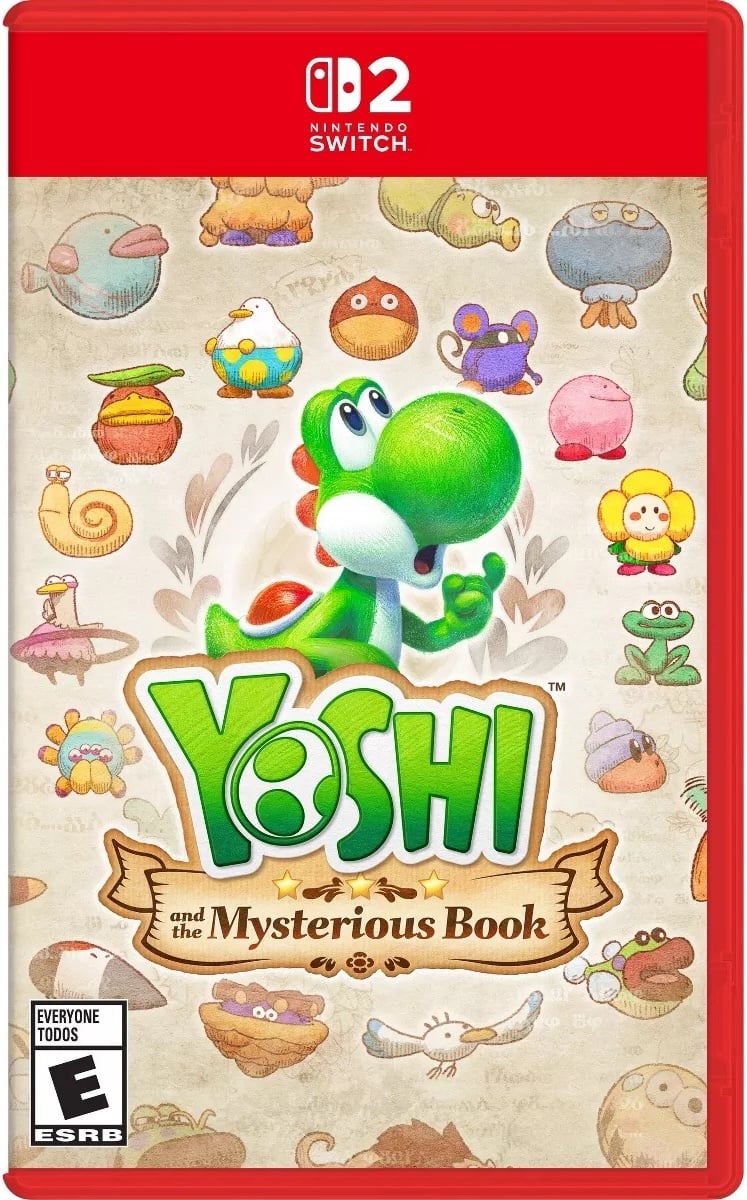
Tuesday, December 2, 2025

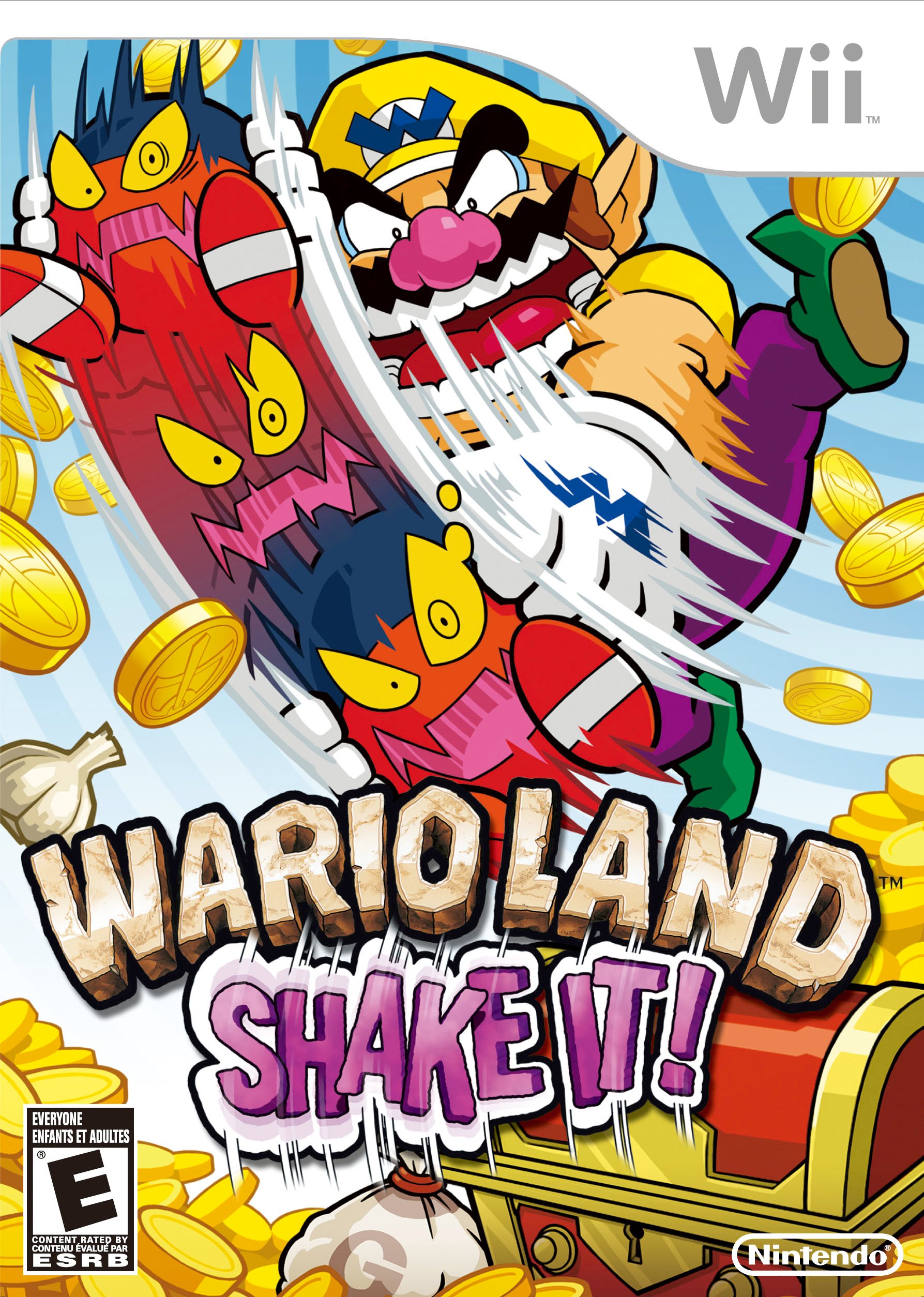
Wario Land: Shake It!


Wario Land: Shake It!

Developer: Good-Feel
Publisher: Nintendo
Original System: Wii
System Played On: Wii U
Rating: 3 stars 

On September 3, 2025, I defeated the Shake King, thus finishing Wario Land: Shake It for the Nintendo Wii (played via the background compatibility of my Wii U). In my playthrough, I collected 74% stages, 43% treasures and 11% missions. And I did it all in 10 2/3 gameplay hours over a span of a little over about 2 months. 

Wario Land: Shake It deserves all the praise it has received for it aesthetic. Wario Land: Shake It decided to go with an anime art style, and it's beautiful, gorgeous enough to rival a Studio Ghibli film. Even more impressive, Wario Land: Shake It uses its anime art style in both cutscenes and in gameplay, and the game smoothly transitions between the two of them. Even current gen consoles using photorealistic graphics in both their cutscenes and gameplay still have jarring noticeable differences between cutscenes and gameplay, yet a 7th gen console (and the Wii, as opposed to the PS3 or Xbox360, nonetheless!) using an anime art style can somehow do it. Seriously, this game is so stunning visually, that I sometimes forgot I was playing a video game, and I thought I was watching an anime movie or television show. For that alone, I would recommend this game to any otaku or weeb!

Although not praised as much yet still praised a lot, Wario Land: Shake It deserves all the praise it has received for its soundtrack. Seriously, I haven't hear so much music genre variety since Paper Mario: Color Splash (yeah, I know Paper Mario: Color Splash came after Wario Land: Shake It, but that's not the order I played them)! Furthermore, all the songs on the soundtrack are well orchestrated, instead of relying on some kind of computer synthesizer. My only complaint about the soundtrack is that the music did not always match the theme of the level, but unless actively listening for that incompatibility, nobody will notice. I personally did not notice until other reviews brought it up to me.

Not receiving praise yet it should, Wario Land: Shake It deserves praise for its screen use. See, Wario Land: Shake It came out in 2008, a year in which media outlets and consumers alike transitioned from the 4:3 ratio CRTVs to 16:9 ratio HDTVs. Video game designers, not knowing which TV their consumers owned, had to somehow account for owners of both types of televisions. Some developers would simply make the game only in the 4:3 ratio, leaving gamers on a 16:9 ratio HDTV with black void columns to the left and to the right (see WarioWare: Smooth Moves, for example). Likewise, some designers would add a static border, which is just a step up from the black void. Other developers would simply stretch out a 4:3 ratio to a 16:9 ratio for those using HDTVs, but that would distort the picture. Other designers would extend the visable screen for those using HDTVs, but with a game primarily made with the 4:3 ratio of CRTVs in mind, seeing extra screen adds little to no benefit to gameplay. Wario Land: Shake It solves this problem in an interesting way. The developers designed the game in 4:3 ratio for gamers still gaming on a CRTV, but for the players playing on the 16:9 ratio of HDTV, to the left and the right of the gameplay screen are borders that keep track of treasures and missions. Again, those gaming on 4:3 CRTVs miss out on nothing, and those playing on 16:9 HDTVs gain an additional benefit of a treasures and missions tracker. I thought this was pretty cool! I'm surprised more games of the time period did not do this.

Of course, as a Wii game, Wario Land: Shake It has motion controls. I have nothing against motion controls. I do not object to them at all. As a matter of fact, I firmly believe that motion controls have a crucial role in reaching true virtual reality. My only critique of motion controls, however, lies on the fact that motion control matches the motion made in real life. Following this simple principle explains why Wii Sports became such a success (outside its pack-in status with the Wii). Wii Tennis feels like swinging a tennis racket, Wii Golf feels like swinging a golf club, Wii Bowling feels like rolling a bowling ball, Wii Baseball feels like pitching & hitting, and Wii Boxing feels like throwing a punch (OK, sometimes it feels like slapping). Motion controls should never merely substitute a button press. Wario Land: Shake It is so inconsistent on this. I can comprehend shaking the Wiimote is like shaking money out of a bag. I can understanding slamming down the Wiimote to simulate punching the ground. Shaking the Wiimote to get Wario to swing on a bar does not compute. Tilting the Wiimote to change the angle of a cannon or to get a bucket car to move along the track does not make sense either (I don't equate this to tilting a joystick or leaning the body).

As with most video games (open world video games as the exception), Wario Land: Shake It progressively unveils the map. Wario Land: Shake It takes revealing the map in an interesting way. After beating each boss, Wario goes back to the Pirate Shop on Captain Syrup's ship the Sweet Stuff to find a map of the next continent available. The game never provides an explanation for this. The game never claims that defeating the boss lifted some kind of fog covering the land. The game doesn't even try to convince that Captain Syrup just so happens to find a lost map piece by accident at the same exact time Wario defeated the boss. The map piece just ends up there. Without a game explanation, it leave anyone wondering why the Pirate Shop couldn't have all the continent maps immediately available. It would not have taken that much effort to make up an in-game explanation. Of course, since these maps come from a Pirate Shop, they cost in-game currency to obtain. Naturally, the price increases as the game progresses. As a result, advancing in the game can come to a halt if failing to collect enough in-game currency. In turn, this can create unnecessary padding, forcing backtracking to replay level previously tread, just to collect more currency. Fortunately for me, I ended up 100% fully completing the first few levels (collecting all treasures and missions) just in the attempt to collect more currency to purchase the next continent map. If the developers had this in mind, good for them. If the designers did not intend for this, then they have created an example of unnecessary padding. Speaking of the map, my gameplay progress revealed that I uncovered 74% of the stages. That's because some of the levels had secret, hidden maps, which need to be discovered in the level. If playing a repeat playthrough after beating the final boss, the ground will sparkle where the secret map is buried. If playing the level for the first time, no such indicator exists, despite the fact the gamer can still dig up the hidden map if discovering, even if with some help (like a walkthrough). It was totally unnecessary to keep these maps so secret and hidden with no indicators on the first playthrough and then to give hints on repeat playthroughs. Make the hints available immediately, and then make the challenge reaching said map.

Yes, Captain Syrup makes her return for the first time since Wario Land II, and she fits in exactly where she left off as a character. She steals, she kidnaps, she deceives, she overcharges and she flirts, all in the name of making more money and getting richer. Her return never felt like a shoe-in for the sake of invoking feelings of nostalgia. She returned for the sake of fulfilling a role that fit her character, which I can appreciate. (Speaking of Captain Syrup, make I make sidebar here? Common video game knowledge will reveal that Waluigi came in existence for the sake of creating Wario a partner for sports game that played doubles, like tennis. Waluigi does indeed work as a Wario version of Luigi, but it begs the question, "Why wasn't Captain Syrup Wario's doubles partner?" After all, Captain Syrup is just a female version of Wario. It would have been nice to have Captain Syrup be Wario's doubles partner, for it would have been the first mixed gender partners.)

[SPOILER ALERT!!] The final boss the Shake King (probably a wordplay on Viking) had me intrigued at first, but then it lost my interest. At first, the Shake King attacks with a dash attack, a earthquake punch and fireballs. Minus the fireballs, the Shake King shares the same attacks as Wario, so the final boss battle at first feels like an equal and fair match between Wario and the Shake King to determine who can utilize the attacks the best. The Shake King's second phase has the same or similar attacks, just more of them, so it feels like an expected and necessary harder test. For the third and final phase, however, the Shake King starts pulling out magic that has never occurred in the entirety of the game. Some of these attacks cane one-hit KO Wario or close to it. This felt so unfair. Final boss battles should feel like a final test on how to utilize all controls and attacks. I had no way to prepare for this final boss battle. The best way way to prepare was to fight the Shake King over and over again. Doing so made phase 1 and 2 quite boring, for the gamer will learn the patterns so well, to the point of delivering all the damage while taking no damage. After all, Wario will need all the life he can get for those final phase attacks! Speaking of which, the game does allow the player to purchase a health potion at the Pirate Shop, which will automatically refill the health bar once all health runs out in battle. Actually, Wario has health potions at his disposal throughout the whole game, but not until the final boss battle does health potions feel absolutely necessary because of the unfairness of the final boss battle. Of course, health potions coming from the Pirate Shop means that they cost in-game currency. If the gamer does not have enough, it will require backtracking to previous levels to earn more currency. Let's say the player earns enough money, purchases a health potion, fights the Shake King, and then loses the final boss battle. The gamer will not get the health potion back. The player must buy another one. If Wario does not have enough money, back to grinding for coins in the prior levels! While this system rewards those who learn the Shake King's patterns, this is not fun. It should have stayed a fair fight between Wario and the Shake King over who knew and utilized the attacks the best, like in Super Mario Land 2: 6 Golden Coins (ironically) [/END SPOILERS]

In conclusion, Wario Land: Shake It is another Wario Land game that once again zooms in and focuses too much on the gimmick of its original system, which in this case, is the motion controls of the Wii. The problem with such a heavy reliance on the gimmick of the Wii's motion controls lies within the disconnect between the motion control input and the action the motion controls should represent. It is such a shame, for the game has a great music soundtrack, great art style and great screen use. Not only do motion controls mar the game's great points, questionable gameplay mechanics and a final boss battle somewhere between unfair and not fun further mar the game's great points. All in all, the highs match the lows, leaving a game somewhere between average and mediocre. That too is a shame because Wario Land: Shake It trends the Wario Land series in an upward direction. True, Wario Land: Shake It does not return the Wario Land series to the glory days of the first 4 games, especially in comparison to Wario Land 4. Wario Land: Shake It, however, does find a way to zoom in and focus on the original system's gimmick yet incorporate the elements that made Wario Land fans fall in love with Wario Land in the first place. This series looked like it could improved to its former glory days, yet Nintendo decided to cut it off, with its last entry on the Wii. That also a shame. As the Switch 1 came to the end of its life to make way for the Switch 2, the Wario Land series was one of the few franchises left untouched by the Switch 1. A Switch Wario Land game that returned to the gameplay mechanics of Wario Land 4 and incorporated elements unique to the Switch hardware would have been loved by Wario Land fans specifically and Nintendo fans in general. Unfortunately, it never came to be, but then again, maybe for good reason. Wario did continue on from the Wii in the form of WarioWare, with a Wii U game, a 3DS game and 2 Switch 1 games. In the long run and in the bigger picture, the Wario Land game really did not do that much to differentiate or to distinguish itself from the Super Mario series. Heck, some of those elements intended to make Wario Land games unique now do appear in Super Mario games. The microgames of the WarioWare games, however, do differ from the minigames of the Mario Party games. Therefore, maybe Wario does fit better as the mascot of the WarioWare microgames series than as the mascot for Wario Land platforming games. Thus, I am glad that the Wario Land series ended, and I am happy to know it ended on a more optimistic note than Wario World or Wario: Master of Disguise. I will always look forward to the next WarioWare installment, but I will also fondly reminisce on the nostalgia of a Wario Land game.

Final Ranking
1. Wario Land 4
2. Wario Land 3
3. Wario Land II
4. Wario Land (1)
5. Wario Land: Shake It!
6. Wario World
7. Wario: Master of Disguise

Wednesday, November 19, 2025

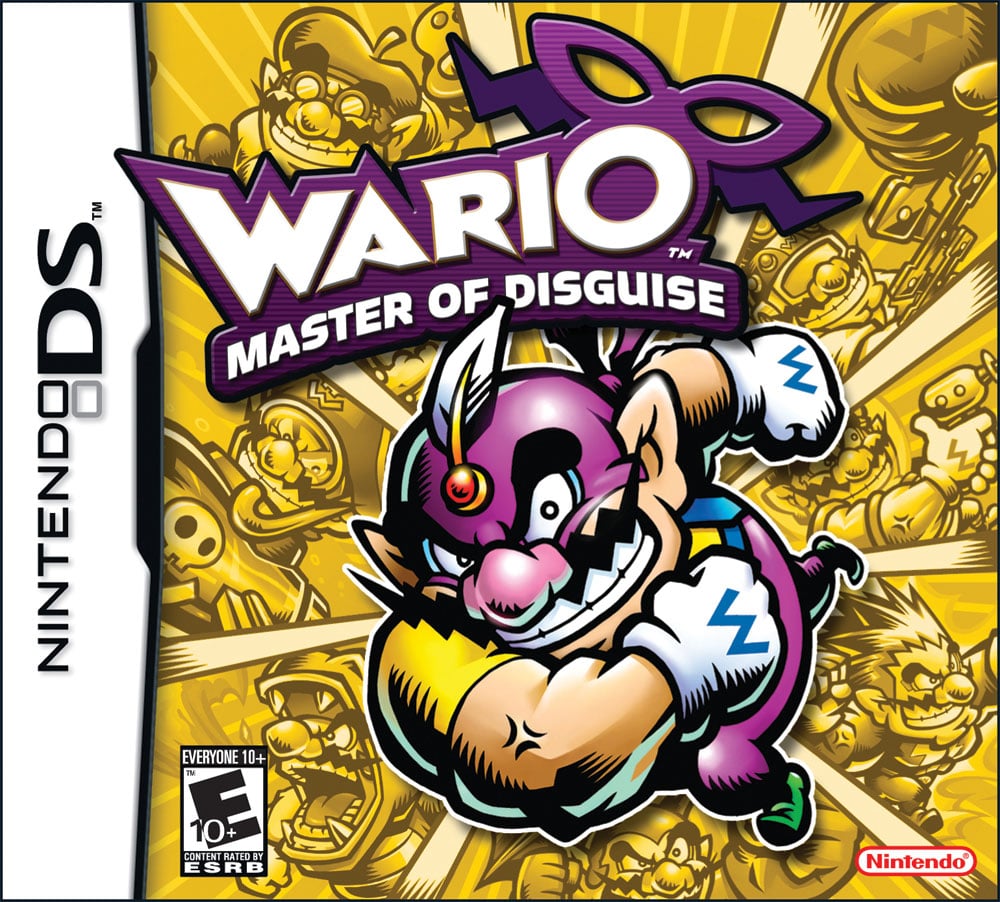
Wario: Master of Disguise


Wario: Master of Disguise

Developer: Suzak
Publisher: Nintendo
Original System: DS
System Played On: Wii U (Virtual Console)
Rating: 1 star 

On July 3, 2025, I defeated Terrormisu, thus finishing Wario Master of Disguise for the Nintendo DS (via the Wii U Virtual Console). My playthrough consisted of both the 10 episodes of the story and the 5 special episode time trials (remember this, this will become important later on). In my playthrough, I earned $580,258 in money and treasures, which earned me the title of "Paragon of Disguise," the third highest title in the game. And I did it all in 24 9/10 gameplay hours in 45 gameplay sessions, averaging 33 minutes 12 second per gameplay session, over the span of 3 months. Let me review this game in order of when the things needing critique appear.

Obviously, the story sets the premise of the game. A bored Wario is watching a television show about a master thief named Count Cannoli, who has entitled himself the Silver Zepher. Jealous of Count Cannoli's wealth, Wario invents the Telmet (portmantua of television helmet) to put himself in the television. Now the good guy of the show becomes the bad guy, the bad guy of the show becomes the worse guy, and the worse guy of the show becomes the worst guy. At least it's not predictable in the sense that the TV show's bad guy sees Wario as "the enemy of my enemy is my friend" or that the plot twist is the bad good is really the good guy and the good guy is really the bad guy. Still, the plot of this game felt predictable. The one thing I could appreciate about the antagonists, though, is that one is a caricature of Mario and another is a caricature of Peach. Very fitting for a Wario game.

As if the plot itself is not bad enough, what makes it worse is that the plot is developed over long discourses of information dump. This becomes most evident when dying multiple times to a boss and having to sit through long dialogues to just face off against the boss again. This got so bad that, while the game provides plenty of fair save points, rendering the Wii U Virtual Console restore points useless, I used them just so I wouldn't have to re-read the long dialogues again! Yes, the press of a button or the tap of the screen will make text move with more speed, but I wouldn't call it a fast forward. Yes, I get the developers were trying to communicate, "Look how witty all these thieves are!" but I never found it entertaining. It doesn't matter if you're into books, movies, television or video games, anyone writing for those mediums will tell you long exposition dumps is bad storytelling. Therefore, Wario: Master of Disguise has bad storytelling.

After a long introductory dialogue dumping some exposition, the gamer finally takes control of Wario. If you belong to the 90% of right-handed people, you will move Wario left and right with the left and right of the D-pad, you will crouch with down on the D-pad, and you will jump and ascend ladders/stairs with the up on the D-pad. Everything else will be controlled with the DS touchscreen stylus your right hand. Don't worry if you're the 10% that's left-handed. Left is Y, right is A, crouch is B, and jump/ascend is X. As if Suzak remembering the lefties is cool enough, even more awesome is that you can use both for movement. For example, if you wanted to jump from left to right, Nintendo expected the player to press right/A and up/X at the same time. The game, however, allows the gamer to press right and X at the same time for the same results. I used this option plenty. Sadly, however, all the other controls have to be done with the touchscreen. It's not as bad as Legend of Zelda: Phantom Hourglass or Legend of Zelda: Spirit Tracks, in which even the movement of Link was controlled by the touchscreen, but it's up there. To perform any attack, the gamer has to tap the enemy. Of course, the player has to first position Wario in close proximity of the enemy for the attack to work, but it still comes down to switching from button controls to touchscreen controls, which can easily be confused, as we will see as this review progresses.

The touchscreen issues become most apparent with the disguises. Of course, it can't be a Wario Land game (yes, I know it technically doesn't have "land" in the title, but most people put any Wario platforming game under the subcategory of "Wario Land") without transformation. Wario: Master of Disguise has 8 disguises Wario can transform into: Thief Wario, Cosmic Wario, Artsy Wario, Genius Wario, Sparky Wario, Captain Wario, Dragon Wario and Wicked Wario. For each transformation, the gamer has to draw a certain shape over Wario: checks for Thief Wario, circle for Cosmic Wario (to represent a space helmet), square/rectangle for Artsy Wario (to represent an easel), a magnifying glass for Genius Wario (looked more like a Greek letter to me), a lightning bolt for Sparky Wario, a semicircle for Captain Wario (I'm guessing a boat hull?), a less than sign for Dragon Wario (like a dragon tail) and a triangle for Wicked Wario (like bat wings). The mnemonic devices makes recalling the symbol for the transformation easy. I can't complain. What I can complain about is the game struggle to recognize these symbols. Constantly the game confused the circle for Cosmic Wario and the rectangle/square for Artsy Wario. Too often the game confused the dragon tail drawing for Dragon Wario with the triangle wing drawing for Wicked Wario. This becomes a problem throughout the  game, especially in the timed special levels, when the game expects the player to transform Wario on demand, yet he or she cannot because the game can't recognize the correct symbol. As if drawing to change costumes isn't bad enough, remember that a lot of these attacks require the gamer to draw on the screen more, which the game further cannot recognize. The worst offender is Artsy Wario. The game almost expect perfect squares to create blocks. One cool thing about this game's transformations is that some can level up to give more powers to the disguise. Cosmic Wario's space gun can ricochet. Artsy Wario can draw more blocks and draw hearts for healing. Genius Wario can punch. Captain Wario can dive with a submarine. Dragon Wario's fire breath can become hotter, destroying blue fire blocks. OK, that last one is lame, for it's just an excuse to create new temporary roadblocks. Lamer is Cosmic Wario's ricochet gun, for the lasers never ricochet where the players wants them to go. Lamest is Artsy Wario. Again, the game has a hard time recognizing the draw of a heart shape, whether big, small, skinny or fat. Even if the player can master drawing a recognizable heart, you can't do it with enemies on screen. Don't even dare during a boss battle (it's like the developers didn't want you to heal during boss battles).

These disguises can be found in treasure chests. Treasure chests hold everything from disguises to keys to money to treasure, depending on its color. All treasure chests are locked. To unlock a treasure chest, you have to play a microgame. Yes, a microgame. By this time, Nintendo has published 5 WarioWare games over the span of 7 years. Wario: Master of Disguise become a game that attempts to combine both Wario Land and WarioWare. There are 8 different microgames, which include connecting dots, tracing drawings, coloring in pictures, matching items with receptacles, squishing roaches, drawing a path and sliding puzzles. A cool thing is that these puzzles do level up, becoming progressively harder once the gamer has become a master expert in the easy puzzles. An uncool thing is that the higher-level puzzles become so hard to the point of becoming impossible. If the player ever fails a microgame, easy or hard, the game boots Wario back out with bombs. Wario must dodge the bombs and re-enter the treasure chest and do another random minigame. This becomes an even bigger pain for the special levels, when everything is on the clock, including the microgame! Yes, the clock continues to run on the microgame. The only fortunate relief is that if the clock expires on the microgame, and the gamer can successfully solve the microgame, the clock will reset. If the player gets stuck with a microgame that is not his or her strength, the player might as well reset the speedrun. If just playing just the 10 episodes of the story, the gamer will find himself or herself ranking puzzles by ease and difficulty, and then purposely losing some microgames in order to get the more favorable microgames. This isn't good game design.

I'll at least give the game credit on the level designs. It could have been way too easy to fall into the Super Mario trap of doing just a basic, generic grass level, desert level, ice level, water level, jungle level, sky level and volcano level. Instead, levels include a cruise ship, a museum, a pyramid, waterworks, a volcano (OK, that one is repeated, but it's taken a new direction with an under-lava experience!), a haunted castle and an ancient garden. As creative and original as these level settings are, they all have flaws. The museum, on the surface, looks creative with puzzles that can be solved with hints in exhibits, but the hints are way to cryptic. The volcano level depends on finding a heat-resistant suit every now and then, and they are hidden, so Wario can die just looking for one. The ancient garden teases the gamer by making it look like all the treasures chests needed to reach the final boss are nearby, but it instead has Wario travel the farthest. These are all flaws that ruin the creative atmosphere.

Most, if not all, episodes end on a boss. The bosses are interesting, and not in a good way. The boss itself gives no hint on a weak spot to defeat said boss. Instead, Goodstyle, Wario's magic wand, provides hints by telling Wario what disguise is necessary to defeat the boss, or at least this certain phase of the boss. This creates a dualist dilemma. Pay attention to Goodstyle's hints, and the boss is too easy. Don't pay attention Goodstyle's hints, and the boss is too hard because the gamer has no idea how to defeat him. I wish there was an option to turn his hints on and off, but I don't think that will solve anything.

Do yourselves a favor. Don't play Wario: Master of Disguise. Instead, watch Dana Carvey's family-friendly comedy Master of Disguise. You'll have a much better time.

Running Ranking
1. Wario Land 4
2. Wario Land 3
3. Wario Land II
4. Wario Land (1)
5. Wario World
6. Wario: Master of Disguise 

Tuesday, November 18, 2025

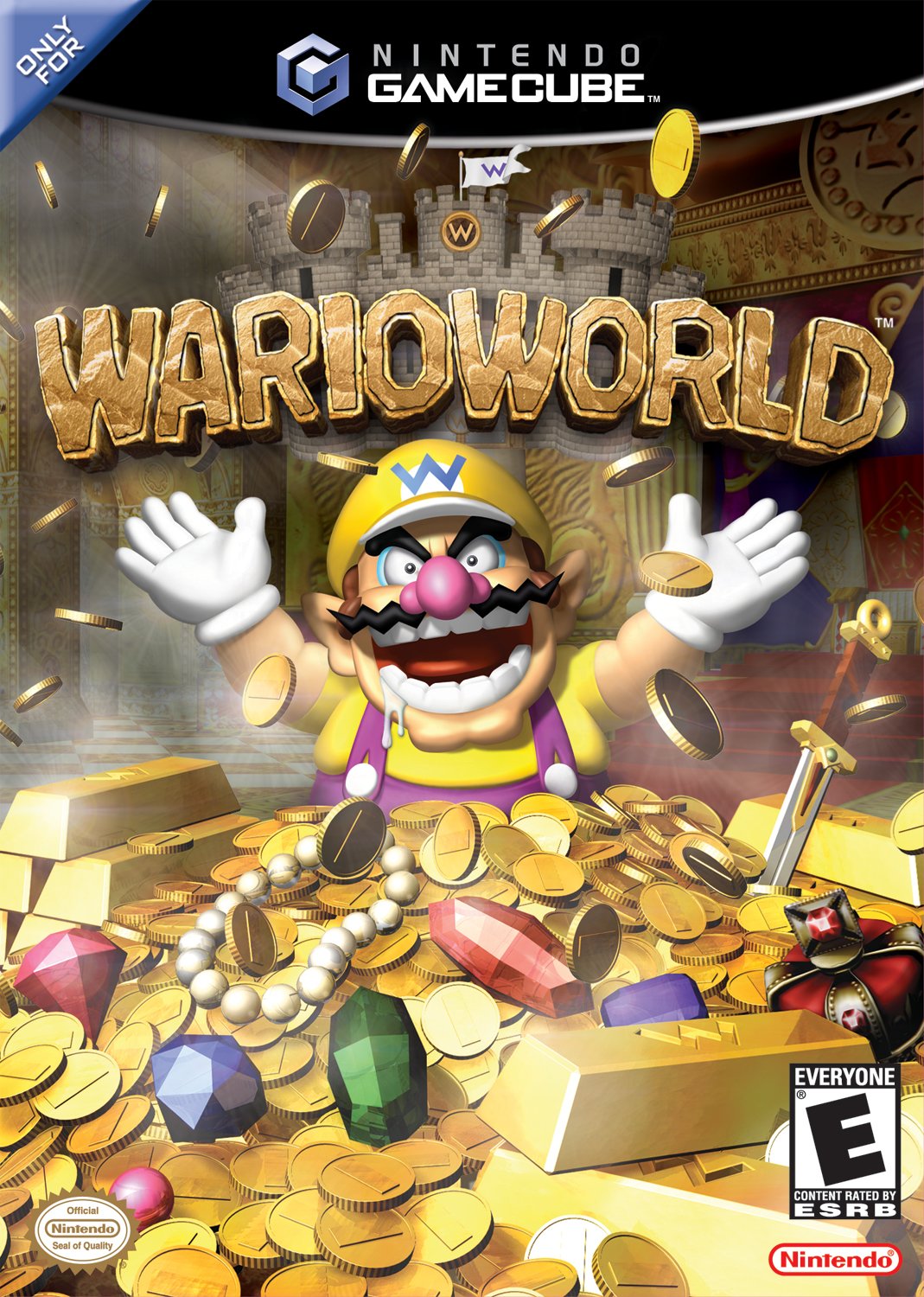
Wario World


Wario World

Developer: Treasure
Publisher: Nintendo
Original System: GameCube
System Played On: GameCube
Rating: 2 1/2 stars 

On April 1 (no joke), I defeated the Black Jewel, thus finishing Wario World on the Nintendo GameCube! In my playthrough, I collected 51 of 64 treasures, all 40 spritelings, and 7 1/2 of 8 hearts. And I did it all in 11 9/10 gameplay hours over a span of 29 days (a little under a month), averaging 24 3/5 minutes per gameplay session.

I mention the average gameplay session time length because the first thing that stuck out to me was how long it took me to beat a level. Before I talk in depth about that, let me mention that there is only technically 4 worlds with 3 levels, 2 of those levels are 3D platforming collectathons and 1 level is solely a boss battle. 12 levels does not seem like a lot, but considering each level takes 25 minutes (rounded up), now it seems like a lot. Boss battle levels take 25 minutes because the boss has a much health as you, so it's an equal matchup right from the start. 3D platforming collectathon levels take 25 minutes because the levels are massive in size, and they have a lot to do. So what's all there to do in a level?

First, there is treasure collecting. Each 3D platforming collectathon level has 8 treasures in it. In order to collect said treasure, the gamer must press the color button, and then find the corresponding color platform. Collecting all treasures in a platform unlock a microgame from the first WarioWare game, as long as the player has a Game Boy Advance and the link cable. Gamers missing 1 or the other will find this reward useless, and even if the player has both, he or she might just have that WarioWare game, rending the reward even more useless. I at least appreciated that some of the treasures were Nintendo's past and present systems.

Second, there is spriteling collection. Each 3D platforming collectathon level has 5 spritelings, locked away by the Black Jewel for imprisoning the Black Jewel in the first place. At first, this spritelings seem to merely serve the purpose of tutorials and hints, however, they actually impact the ending of the game. The more spritelings Wario saves, the fancier the castle at the end of the credits. Collect all 40 spritelings, and Wario has more treasures than he started. Looking up a solution for another problem, I noticed I already had 36 of 40 spritelings. Therefore, I took the time to find the last four before taking on the end boss. I'm not sure if the ending was worth it, though.

Third, there is red crystal collection. Red crystals unlock the 3D platforming collectathon's boss battle. Each 3D platforming collectathon level has 8 red crystals. Earlier levels on require 3 red crystals, but later levels will require 6. These red crystals are behind trap doors. Sometimes, a simple ground pound/hip drop will break open the trap door, while at other times, only a Piledriver will open the trap door. The trap doors requiring a simple ground pound/hip drop leads to levels similar to Toad's Treasure Tracker. Use the C-stick to navigate through the puzzle to reach the red crystal. The trap doors needing the piledriver lead to levels that remind me of the Super Mario Sunshine levels without FLUUD. Except this time the Wario Land episodes are more doable. Both levels were a nice changeup from the regular gameplay of scouring the level to look for treasures.

Fourth, there is gold statue parts. Each 3D platforming collectathon level has 8 gold statue pieces. Collecting all 8 will earn Wario a half heart, with the hearts maxing out at 8. This power up probably has the most in-game use, as the bosses will level up as the game advances. I got 7 1/2 hearts because I came up short 3 pieces in the last level, which had already given much such a headache just trying to find the end boss. If any gamer chooses just to collection 1 collectable, that gamer better make sure he or she has hearts as the collectable.

Fifth, there are coins to collect, but just like with Treasures, they seem to have little or no value to the after credits scene. The only thing the coins do is allow for extra continues, which also ramps up, maxing out at 500 coins. I ran out of coins nears the final boss battles, so I could not continue. Speaking of coins, Wario does not have the same immortality or transformations as prior games, so if a player falls off a ledge, that player needs to find the box with the hidden spring to launch back into the level. Also, poisonous water exists all around the underworld, which sucks out the hard-earning coins. No joke, on one occasion, I lost 1000+ coins in that underworld. This was more boring and tedious than creative and innovative.  I wish it was axed.

[SPOILER ALERT!] After clearing all 12 levels, the big treasure chest north of the island pops open, revealing Black Jewel. The Black Jewel has 8 lives, rewarding the gamers who took the time to increase their hearts to 8, making it an even fight. Those gamers who did not end are going to find themselves going for an almost perfect run. Here in North America, the Black Jewel only has 1 cycle. The attacks may increase in speed with every passing cycle, but besides that, once the pattern is down, it's smooth sailing to the finish. Japan, on the other end, got more a true boss fight, with the Black Jewel taking center stage in the fight, fighting head on. Man, I wish we got the Japan version [/END SPOILERS!]

In conclusion, I have mixed feelings about Wario World. When on the handheld systems, the Wario Land games naturally progressed from copying Super Mario to becoming its own thing. Besides making the move to 3D, Wario World doesn't seem to go beyond that. No Metroidvania-like traveling. No power-ups besides garlic to give an extra power to Wario. No cutscenes at the beginning or end (instead, the game provides static text and flashes of images). Furthermore, the controls feel off, which makes me doubt if the developers had any experience with platforming games, especially 3D platforming games. The poor lighting made it hard to see ladders. Therefore, with all that in mind, I give Wario World a ranking of 2 1/2 stars. It's somewhere between a bad game and an average game. I would play this game until you get sick and tired of finicky 3D platforming and tedious collecting, and then watch a Let's Play of the rest.

Hey, at least it can't get any worse than this, right? Right?! RIGHT!?! It's going to get worse, isn't it? 

Running Ranking
1. Wario Land 4
2. Wario Land 3
3. Wario Land 2
4. Wario Land 1
5. Wario World 

Tuesday, November 4, 2025

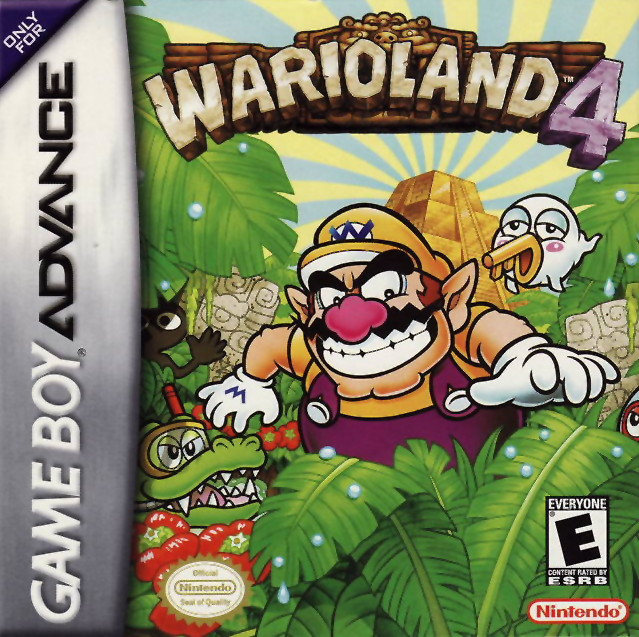
Wario Land 4

Wario Land 4
Developer: Nintendo
Publisher: Nintendo
Original System: Game Boy Advance
System Played On: Wii U (Virtual Console)
Rating: 5 stars 

On March 3, 2025, I defeated the Golden Diva, and earned the best ending on normal, thus finishing Wario Land 4 for the Game Boy Advance (via the Wii U Virtual Console)! In my playthrough, I collected 8 of 16 music tracks (that's half of them!), and I earned $130,270. And I did it all in 10 1/2 gameplay hours over the span of 17 days.

Wario Land 4 clearly has a primarily, secondary and tertiary gameplay loop built into each level. Let's break that down.


The primary gameplay loop is to find the switch in each level, which reopens the portal, allowing Wario to exit. Upon hitting said switch, a timer triggers, and Wario must race back to the portal at the beginning of the level. Yes, Wario Land 4 reintroduces the level timer, and they do so perfectly. The timer does not go off until the switch to trigger the exit becomes activated. Therefore, the game safely assumes that the gamer has explored everything, and he or she only desires to exit the level. Prior to hitting the switch, the player has no time limit, meaning the player can patiently explore the level. Only until the gamer wants to exit that the timer appears. Again, it's that perfect balance of exploring to find collectables and testing the player to see how well he or she knows the level. Yes, sometimes Wario Land 4 change up the level on the return, and yes, the game sometimes places collectables along the return road, but the timer accounts for that, adding more time. Still, even so, a seasoned veteran of video gamers could beat the clock in its own race with time to spare.


The secondary gameplay loop is finding Keyser. See, activating the switch and returning to the portal merely helps Wario escape the level with treasures intact. To actually advance to the next level, the gamer needs to discover Keyser in the level and collect Keyser before exiting the level. Most often, Keyser appears before switch in the level, but sometimes Keyser can show up after the switch activates. Again, the timer accounts for this, giving more time to find a hidden key. To me, this secondary gameplay loop is redundant. Getting out of the level feels like it should come with automatic advancement in the game. Nothing felt more disappointing than making it back to the exit portal, only to then witness the door not opening because the door. Keyser should have come automatically with activating the swtich, or at least come close nearby in every level.

The tertiary gameplay loop is finding the 4 pieces of a jewel. Once all 4 pieces come together, they form a jewel. 4 jewels unlock the door to that boss. Finding these jewels take a little bit more exploration, at least departing from the main path. At first, I thought I would have to a walkthrough for the missing jewel pieces. Upon a second playthrough of the levels, though, I easily saw the spaces I missed within the level, which made me in turn easily find the missing jewel pieces. I guess this is natural progression of how to maneuver Wario and how to navigate the level.

The bosses are really the lowest and weakest point of Wario Land 4. Most of the bosses have hard to see weak points. When the gamer can find these weak points, the bosses have small hit boxes, making  it hard to give and receive blows. On top of that, these bosses are damage sponges. I would have to say that, on average, a boss takes about 12 hits before defeating that boss. Did I also mention that these too are timed? I imagine the high hit count intended to combat the minigame rewards. See, Wario Land 4 has 3 minigames installed in it. These minigames could be the predecessors to WarioWare's microgames. Every time that the gamer reaches a milestone in the minigame, the game rewards that players with a token, which can be spent in the item store. While all items have funky names, they also all deal damage to the boss before Wario can engage in battle. Depending on the boss, some items do more damage, and some do less. I tried doing it item free, but I got too irritated at small hitboxes and damage sponging. Therefore, I grinded in the minigames to save up to enough tokens to buy an item at the item shop for Aerodent and Golden Diva. Since Golden Diva is the final boss, even the best item will only deliver half the damage. For the other bosses, however, the right item will deal all but 1 life in the health bar. It feels like cheating, but it also feels like you have no other choice when it feels like the bosses have an unfair advantage.

[SPOILER ALERT!] The end game is a well-done end game. It may be only 1 level before the final boss, but it's a good example of what an end level should look like. The level tests you on everything the gamer has learned to this point, for the player will need to know it to advance in this level and onward to the next level. On top of that, the developers put the switch for the time right below the portal, forcing the players to fall on it and trigger it immediately. Therefore, on top of the gamers proving they know everything about traversing levels, the gamers also have to prove they can do it with time constraints. The final boss follows the same pattern, as each one of the phases reflects back to a previous boss. Think of it as a boss gauntlet, just summed up in a single final boss. [/END SPOILERS]

While Wario Land 4 looks and feels more like Wario Land 1 and 2 than Wario Land 3, this observation should not be mistaken for a setback. On the contrary, Nintendo figured out a way to utilize the full potential of the Game Boy Advance hardware at launch to deliver a unique gameplay experience. Wario Land 4 reintroduces the timer, as well as adds a life bar, but it does so in a way that still encourages exploration. The addition of the life bar also does a better job of encouraging not taking a hit, for it could lead to a loss of company power. Wario finally has his iconic color palette of canary yellow and light purple, unlike the black and white on the Game Boy Color. The soundtrack, as well as the unlockable soundtracks, match the goofiness of Wario. The theming of the levels does not default to the typical themes found in the Super Mario series (grass land, desert land, water land, ice land, sky land, volcano land, etc.), minus emerald passage. As I play more games in the Wario Land series, and as I hear what other people have to say about these games, I would say these games grow on me with every passing game, instead of distract me. Wario Land 4 is a masterclass of how to do game development correctly, especially in the game mechanics department, as evident in the clear primary, secondary and tertiary gameplay loop naturally built into the game. The delayed and trigger timer allow the gamer the opportunity to explore the level, yet at the same time, it tests the player to see if they know how to traverse the level well. With proper exploration of the level, the game will easily find the switch, Keyser and the jewel pieces, and the player will never have to consult outside help, like a walkthrough. With this masterclass of game design, no wonder so many clones have popped up, like Pizza Tower! Therefore, for all these reasons, I give Wario Land 4 a ranking of 5 stars. Wario Land 4 is very good game, not just for the Wario Land series or a Wario game in general, but for all video games in general. If you can, I would 100% fully complete the game with the best ending on all difficulties.

Unfortunately, in my opinion, Wario Land 4 for will be the height of the Wario Land series. Every other game from here out will focus too much on the gimmick of its console and forgot this masterclass on game design. From here out on out, it will be a competition to just not end up on the bottom.

Running Ranking
1. Wario Land 4
2. Wario Land 3
3. Wario Land 2
4. Wario Land 1 

Wednesday, October 29, 2025

Wario Land 3


Wario Land 3

Developer: Nintendo
Publisher: Nintendo
Original System: Game Boy Color
System Played On: 3DS (Virtual Console)
Rating: 4 1/2 stars 

On February 15, 2025, I defeated the Hidden Figure, thus finishing Wario Land 3 for the Game Boy Color (via the 3DS Virtual Console)! This is the 3rd Wario Land game I have finished. And I did it in 14 3/5 gameplay hours in a span of about 2 weeks / half of a month.

I actually do have some prior experience with Wario Land 3. Sometime during childhood, shortly after getting my Game Boy Color, for either birthday or Christmas, I asked my parents for any Game Boy Color game, just to merely increase my library of Game Boy Color games. Randomly, they got me Wario Land 3. I remember playing the game, and I also remember never finishing it. I remember getting stuck, and with the internet still young and video game walkthrough websites still new, I couldn't find the answer online, so I gave up on the game. This is why, when it came time to sell my Game Boy Color to buy a Game Boy Advance, I included Wario Land 3 as a package deal. Replaying this game as an adult, my childhood frustration of getting lost and getting stuck is still warranted. The only in-game hint system is the temple, in which the Hidden Figure will tell you where to go, and that's it. It tells you neither which color key/chest to go after nor which power up you will need to get there nor were exactly that color key/chest is. While this hint system prevents anybody from becoming lost on where to go, it does not prevent getting lost once there. Luckily for me playing this game again as an adult in 2025, I found a very thorough walkthrough on GameFAQs, which I had to consult plenty, especially near the end of the game. I can't imagine how anyone can get through the game without it.

I wasn't expecting Wario Land 3 to belong to the "Metroidvania" genre. Yes, Wario Land 3 belongs to the Metroidvania genre. The entire game takes place in 1 world. Certain areas of the world map unlock depending on which treasures become unlocked. Certain areas within each level become unlocked by discovering treasure that give certain power ups. This requires a lot of backtracking to older levels, as now certain power ups allow Wario to travel to previously unreachable areas in the level. It was very interesting starting out a Wario Land game with a Wario who did not have all the abilities that he did in Wario Land 1 & 2 from the onset. Once near the end of the game, however, Wario does have all those abilities, and it once again feels natural controlling Wario.

Once again, Wario in Wario Land 3 does not have power ups like a traditional Super Mario game does. At best, Wario regains his abilities by collecting certain treasures, but that's about it. The next closest thing is that certain enemies give Wario status changes, almost like a "power down." In Wario Land 2, these power downs were implemented well, as most often, Wario needed these power downs to access certain parts of an area. While still happens in Wario Land 3, it happens a whole lot less. More often, these power downs become more of annoyance or an inconvenience, as they drag Wario away from where he needs to be. Therefore, I would say that the power downs in Wario Land 3 are done poorly, especially in light of Wario Land 2, where they are done well.

Once again, Wario Land 3 takes an alternative route when it comes to boss battles. Unlike a traditional Super Mario game, Wario cannot lose a life or get a game over in a boss battle (minus the final boss battle). Instead, Wario simply gets booted out of the boss area and has to go back to the boss area to start all over again. Between finishing Wario Land 2 and playing Wario Land 3, I watched a YouTube video which explained why this fits his character as originally a bad guy, and I have to say, I've come to like this way. Nintendo must have received complaints about how long it takes to get back to the boss area, though, for Nintendo fixed that with Wario Land 3. Wario Land 3 has a whole lot of shorter paths to return to the boss battle than Wario Land 2. Still, I would still prefer if the boss battle would allow me to pick up where I left off instead of having to begin the whole ordeal all over again.

You may have noticed I didn't record my progress toward completion. The game really doesn't do a good job of it, especially in comparison to prior games in the series, i.e. no completion percentage after the credits. As a matter of fact, one of the treasures to collect in the game is a magnifying glass, which lets the gamer know which treasures have already been collected without entering the level. Same goes for the music box coins, the other collectable in the game. While I know I collected all 4 treasures in multiple levels, only 1 level I collected all 8 of its music box coins. If previous games could let the player know the completion percentage, then so could this game. I could tell you, however, the game's coin counter maxes out at 999, for I did that a couple of times, including by the end of the game.

Wario Land 3 also has a minigame of minigolf. It does the typical golf video game gameplay, with a meter for both power and accuracy. Personally, I found it hard to control. I felt like the best strategy was to just it the ball as powerfully and accurately as possible and then hope for the best. The courses come up randomly, and it does cost money to play, but finding money becomes quite easy, so it's nothing to fret spending all this money.

In conclusion, to sum everything up, Nintendo continues to experiment on what makes a Wario Land game unique, distinct from a Super Mario game. The first game of the franchise was very linear. The second game of the series experimented with a branching narrative. The only way to go up from branching story was naturally a Metroidvania, which was exactly what Nintendo did. The Metroidvania genre makes Wario Land 3 feel fresh from the rest of the games in the franchise. At first, not having all of Wario's abilities expected from earlier games in the series feels quite frustrating for the seasoned veteran of Wario Land games. As the game progresses, however, the limitation allows and invites the gamer to experiment how to reach goals with said limitations. Despite the lack of game overs due to Wario's inability to die, the game finds way to annoy and frustrate the player to discourage the player from powering through the levels. While overall Wario Land 2 did a better job of the enemies powering down Wario, the power downs in Wario Land 3 further reinforce avoiding enemies, despite the fact Wario can't die. With all this in mind, I therefore give Wario Land 3 4 1/2 stars. It's somewhere between a good game and a very good game. I would play this game until you finish it, and if you liked it well enough, then fully complete it, but do not feel obligated to do so.

Running Ranking
1. Wario Land 3
2. Wario Land 2
3. Wario Land 1 

Tuesday, October 28, 2025

Wario Land II

Wario Land II
Developer: Nintendo
Publisher: Nintendo
Original System: Game Boy Color
System Played On: 3DS (Virtual Console)
Rating: 4 stars 

On February 1, 2025 I got all 5 endings, thus finishing Wario Land II for the Game Boy Color (via the 3DS Virtual Console)! This is the 2nd Wario game that I have finished. In my playthrough, I collected 54% of the treasures and 78% of the picture panels, as well as cleared 100% of the stages. And I did it all in 15 1/4 gameplay hours over the span of 21 days / 3 weeks / 2/3 a month. To change things up, and for the fun of it, I will make my comments with a plus (+) signifying a positive and a minus (-) signifying a negative. Then I will sum up my overall thoughts and feelings in the conclusion.

+The removal of the time clock does encourage exploration.

+Getting power-ups from the enemies instead of an item was definitely a very big positive. The last game felt like random items gave random effects. This time the enemy gives the effects, which have both advantages and disadvantages. Sometimes you actively pursue these power-ups, and at other times, you actively avoid them. Some puzzles even require them.

-The boss throwing Wario out of the ring, causing Wario's handler to retrace steps was an interesting take to boss battles. I would be on board with this change, if it weren't for one detail. When the boss throws Wario out of the room, Wario must begin from the boss battle from the start when he re-enters the room. If the boss battle would have merely picked up where it left off, that would have been fine. It's the fact the boss battles start all over again that has me annoyed by this feature.

-Why is Wario in white, especially in the Game Boy Color? I'm pretty sure he's established as purple overalls and yellow shirt & hat by now (see Mario Kart 64). Of all the systems to not show off Wario's colors, the Game Boy Color is the worst one to do so.

-This game is both linear and non-linear at the same time. On the first playthrough, the game is very linear, as it only gives you the option of 1 ending. The second and thereafter allows for multiple routes for multiple endings. I think multiple endings should be allowed from the onset.

-Wario Land II offers 2 minigames: a picture matching game and a number matching game. Completing all the minigames is required for 100% full completion. Both minigames become easier by putting more money into them. With the amount of money at the end of the game determining the gamer's final ranking in the game, however, both minigames discourage spending the money to make the minigame easier and encourage not spending money, which in turn results in a harder minigame. Putting the least amount of money into the picture matching game results in the pictures instantly flashing before the player's eyes, meaning the player must have immediate reaction. Failure to succeed at this game will result in having to play the minigame again, which costs more money. Putting the least amount of money into the number matching game will only reveal a ninth of the number, which the game has to guess from a range of 0 to 9. Virtually, the gamer is playing a guessing game based on luck, with a 10% probability of winning. Failure to win at this game requires replaying the whole level. Again, the prizes for winning these minigames are collectibles for 100% full completion and nothing more, and even then, they can be a detriment to fully completing the game with a high ranking. It almost feels like whoever plays Wario Land II has to choose whether he or she wants to 100% fully complete the game or go for the highest ranking but not both. Only the most season Wario Land II expert can do both.

In conclusion, to sum everything up, Nintendo continues to experiment on how to make a Wario Land game a unique platforing experience, at least unique from a Super Mario platforming game. The gameplay mechanic utilized to make Wario Land II unique is Wario's immortality. Enemy attacks that would kill Mario either knocks Wario back and costs Wario coins, or in some cases, gives him a power-up, which within itself can either be advantage or disadvantage. For this game, it works! Even though Wario can't die, the gamer won't want to just damage boost through the level. In a game which determines the final ranking based on the amount of currency at the end of the game, the player carefully avoids or attacks enemies, in fear of losing that precious money that will impact the final ranking. Overall, I would say that Wario Land II does a better job of making a Wario Land look and feel unique than its prequel. The prequel merely takes a Super Mario platforming game and gives it a Wario skin. This game stands out as unique in comparison to a Super Mario platforming game in the branching story, Wario's attacks, Wario's power-ups given by enemies and the bosses. Wario Land II is definitely an improvement from its prequel. I give it 4 stars. It's a good game. Make sure you play it until finish, but don't worry about ranking or completion.

Running Ranking
1. Wario Land II
2. Wario Land (1) 

Wednesday, October 22, 2025

Wario Land (1): Super Mario Land 3


Wario Land (1): Super Mario Land 3

Developer: Nintendo
Publisher: Nintendo
Original System: Game Boy
System Played On: 3DS (Virtual Console)
Rating: 3 1/2 stars 

On January 10, 2025, I cleared all 40 courses and defeated the Genie, thus finishing Wario Land (1), also known as Super Mario Land 3, for the Game Boy (via the 3DS Virtual Console)! This is the 1st Wario [Land] game I have finished. After my playthrough, I ended with 1,585 coins and 3 treasures. Once I traded those treasures in for coins, my price increased to 12,585 coins, which equates to 2 moneybags, which earned Wario the tree stump house. I also collected a maximum of 19 extra lives. And I did this all in a matter of 5 3/4 hours over 7 gameplay sessions (averaging 3/4 hour per playing session) over the real-time span of 10 days / 1 1/2 weeks / 1/3 month.

Just like the Yoshi games, Nintendo did not want Wario Land to become just another platforming game. The gamer can play that way, however, if he or she chooses. I did choose that route, hence why it only took me 5 1/4 hours, hence why I had a poor final score. This game encourages exploration. I do have some grievances, however, for some of the game mechanics go contrary to this encouraged exploration.

First, why is there a time clock again? Yoshi was smart about this. They turned off the time clock, so the player did not feel rushed to find all the collectables and raise to the finish line. Wario does bring back the time clock, causing a hesitancy in exploring, because spending the time to seek and find will be something the player may not be able to afford down the road.

Second, why didn't the game just leave the end goal gates wide open? OK, to be fair, Nintendo did try to teach this in game. At the close of the first level, Wario watches an NPC opens the door to conclude the level. The only problem, however, is that the game never tells the gamer which controller inputs to use. I honestly had to look up a walkthrough on how to progress. Apparently, the correct answer was Up+B. To be fair, I don't have the manual, and to be fair, I imagine a player with a manual can easily look it up. As a gamer new to this series, however, I am neither familiar with the mechanic of having to open the end goal gates, nor do I have a manual to look these things up for myself (people lose manuals, as evident by the number of "game cartridge only" listings on eBay). Do better, Nintendo, for your future games. You need to more explicitly teach this in the game.

Third, the treasure concept was never fully fleshed out for the players. All my trophies were found randomly because I just so happened to stumble upon either the key or the chest at the end. To make matters worse, if you get a game over, you lose a treasure. If you have no treasures to surrender, upon getting a game over, you lose half your coins. To me, this is too steep of a punishment. Because you lose trophies, you now need to go back to that course to find it again and manage your way through that level again. Losing half your coins is not as bad in the beginning of the game, but is a whole lot worse near the end of the game. That's unfair to players who have experience who just slip up near the end. I say the penalty for game over should have been a simple loss of 100 coins. Not too little, not too much.

Bosses lacked creativity. Most of the bosses were just giant-sized common enemies. Most of those bosses had the same exact way to defeat them: throw their babies at them. I don't know how many of my enemies and foes I defeated by throwing their kids at them. Speaking of bosses...

[SPOILER ALERT!!] I did not enjoy playing flip cup, or rather, flip lamp, while dodging genie attacks. As far as I am concerned, there is no way to guarantee for the lamp to land right side up, so the gamer can catch the cloud elevator up. Therefore, the player is just playing points at this point. Of course, as a Game Boy game, final boss battle takes 6 hits, not 3. Since the boss never changes phases, this rote repetition, which is tedious [/END SPOILERS]

Despite my gripes with the game, I found the game to an overall enjoyable experience, and I liked playing it. Although the subtitle of "Super Mario Land 3" was probably attached at the end to sell more games as a sequel to a beloved series, the subtitle fits. At the heart, this game is a platformer, just like the previous Super Mario Land games on the Game Boy. Just like the prior Super Mario Land games, the gamer aims to reach the goal at the end of level by jumping from platform to platform while either avoiding or attacking enemies. Just like Super Mario Land 1 & 2, the player has power-ups at Wario's disposal to make gameplay easier. At the same time, however, Nintendo mad enough changes to the formula to make the experience feel unique to Wario. Mario eats mushrooms to grow big; Wario eats garlic to grow big. Mario uses flowers to throw fireballs; Wario uses a dragon pot to breathe fire. It's not just the power-ups, it's also the attacks. Small and weak Mario can only resort to jumping on enemies; big and bulked up Wario can body slam and ground point. It's not just the attacks and the power-ups, but it's also the worlds, the enemies and the bosses, too. Yes, even the bosses. While the bosses lacked creativity, they felt like they could not belong in a Mario game, but they definitely belonged in a Wario game. Nintendo will continue to experiment on how to make a Wario Land game feel unique to Wario and not just another platforming game, but as for right now, having a Mario-like platforming game with Wario skin suffices. 

Friday, December 27, 2024

2024: The Year of Yoshi

Since 2015, I have dedicated the year to playing through all video games of a single video game franchise, and and since 2017, I have devoted that year to playing all video games of a single Nintendo series. I have also made it a habit to blog about by the end of the year on this blog, my video gaming blog. Starting out in 2017, I would just write a big, single post, telling my story of how the year progressed in playing these video games. As the years progressed, and as the blog posts got longer, I realized my posts merely combined my mini-review Facebook posts/status updates into one giant blog post, not really telling a story like in former years. Therefore, since 2022, near the end of year, I would publish onto this blog full-blown reviews of each of the games played this year. This year, 2024, has created a challenge to continuing this recent tradition. Between researching for a dissertation (yes, still) and adopting two children under the age of two (yes, now two), I no longer have the abundance of time to play and review games, especially when the series has more than 6 games. Still, I can't go back to my old format of telling the story of how the year went. After all, I'm just playing the games in order of release date. Therefore, for this year, I will try a new format. In past years, I would rank my favorite games of the series in a simple Facebook post/status update. For this year, the yearly blog will consist of an expanded ranking of favorite games. To make this expanded ranking, yet prevent it from becoming a long compilation of reviews, this blog will use bullet points to praise positives and criticize negatives. Each game will also mention a favorite part, as well as rank the game on a scale ranging from 0 stars to 5 stars, allowing for half-star ratings. Please note that the star rating reflects how good or bad the game is for a Yoshi game within the Yoshi series, not necessarily how good or bad the game is for a video game. Also please notice that number of positives and negatives does not solely reflect the game's ranking or rating, for the list of positives and negatives does not account for the amount of times I encountered the positives and negatives. The order of the games will go from most favorite to least favorite.


1) Yoshi's Island DS (DS)

+Positives+:
+Feels more like a direct sequel to the original Yoshi's Island than other sequels
+More of the original Yoshi's Island and yet better than the original Yoshi's Island
+Captures the same art style as the original Yoshi's Island, yet sharper
+Utilizes both top screen and bottom screen of the DS naturally with "look up/down" feature
+Addition of different babies with different powers adds a layer of complexity
+Ditto on all positives of original Yoshi's Island (see below)

-Negatives-:
-"Look up/down" feature not as responsive as it should be
-No way to change baby between levels
-Levels do not provide enough hints on which baby to use, resulting in a lot of backtracking
-Baby Wario and Baby Bowser available for only 1 world
-2 maze levels are way too easily to get lost

~Favorite Part~: Figuring out which baby to use to get the most effective results, which itself can result in quite the feeling of a power trip

*Rating*: 5 stars 


2) Yoshi's Island (Super Nintendo)

+Positives+:
+Collectives give the player more to do than just reach the end of the level
+Clear objectives on what full completion of a level looks like
+Transportation transformations changes up gameplay to prevent staleness
+Removal of time clock encourages exploration
+Exchanging life meter/points for baby Mario separation countdown innovates on gameplay
+Color drawings art style proves that aesthetic does not equate to graphics

-Negatives-:
-Some collectables are too hidden
-Some collectables are too hard to get
-Mini-bosses and bosses are just giant forms of common enemies
-Little variation on how to beat mini-bosses and bosses
-Unclear on how to beat Big Baby Bowser

~Favorite Part~: THAT MENU MUSIC!!!

*Rating*: 4 1/2 stars


3) Yoshi's New Island (3DS)

+Positives+
+Bottom screen keeps track of collectables, not taking up space on the top screen or constantly pausing
+Stuck with standard controls, instead of trying to force touch screen controls
+Eggdozer is pretty much the equivalent of the Mega Mushroom on New Super Mario Bros. but better
+Final boss battle controls function as they should
+Extra final boss for those who resist using Flutter Wings cheat/help
+Extra end credits cutscene for those who resist using Flutter Wings cheat/help, which provides lore
+Game automatically provides a checkpoint between final boss and extra final boss
+3DS entry into the series not the worst game of the series, as with so many other Nintendo franchises

-Negatives-
-Bottom screen just keeping track of collectables restricts innovative gameplay
-Gameplay returns to vanilla Yoshi's Island, which feels like a downgrade next to Yoshi's Island DS
-Instead of collectables earning points, collectables are kept track of separately, ruining motivation
-All transportation transformations come down to steering with tilt controls and shooting with a button
-No real, big difference between Eggdozer and Metal Eggdozer
-Too easy to accidentally pick up the Flutter Wings cheat/help, which automatically gives the bad ending
-Extra final boss is just final boss but faster
-Music orchestrated with children's toy instruments sounds awful!

~Favorite Part~: Power trip and satisfying feeling for correctly projecting an Eggdozer

*Rating*: 4 stars


4) Yoshi's Crafted World (Switch)

+Positives+:
+Plays well on joycons, pro controller, and third party controllers
+Plays well in TV mode, tabletop mode and handheld mode
+Collecting smiley flowers have a benefit to gameplay, not just collecting for the sake of collecting
+Costumes have gameplay purpose, not just for looks
+Amiibo support has gameplay purpose, not just for looks
+Return of game overs (kind of sort of), which the previous game lacked
+Badges do not return from previous game, which made the prior game too easy
+Levels with alternative gameplay styles have plenty of variety from each other
+Original bosses
+Flip slide allowing the gamer to see the back side of the crafted world is creative
+Scavenger hunts smart enough to allow the player to end the level upon finding the souvenirs
+Most doable game in the Yoshi series to 100% fully complete

-Negatives-:
-No fixed number on smiley flowers per level makes keeping track of smiley flowers hard
-Too many coins make coin smiley flower, extra lives and unlockable costumes meaningless
-Costumes could make game too easy
-Amiibo support only for characters in the Mario franchise
-No baby Mario means a life bar/meter again
-Slight change to egg throwing controls may throw off longtime Yoshi gamers
-Game can't always tell if player aims eggs up, down, left, right, forward or backwards
-Front side + flip side + souvenirs scavenger hunt = artificial padding
-Flip side levels give either too much time or not enough time
-Collectables kept track separately instead of contributing to a high score, ruining motivation
-Only 1 save file per profile
-While easiest game to 100% fully complete, most tedious game to 100% fully complete

~Favorite Part~: Playing the flip side level just to see all the creative was the developers used raw materials to create the crafted world

*Rating*: 3 1/2 stars


5) Yoshi's Woolly World (Wii U)

+Positives+:
+Plays well on Wii U Game Pad, Pro Controller, Classical Controller and sideways Wiimote
+Wonder Wool collectable gives more to do, especially if bored with smiley flowers and red coins
+Wonder Wool collectable goes along with the story
+Yoshi unlocked in the level goes along with the theme of the level
+Amiibo support for most Amiibos, even those outside the Mario and Yoshi series

-Negatives-:
-No use of Game Pad's microphone, gyroscope or touchscreen underutilizes Wii U hardware
-Keeps tracks of collectable separately, instead of creating a high score, ruining motivation
-Amiibo support just for looks, does nothing for gameplay
-No Pokemon amiibo support!
-No baby Mario; game uses life bar/meter/points instead
-No game over makes veteran gamers feel babied
-Badges make game too easy
-Boss battles overused/too repetitive
-Baby Bowser as the main antagonist makes no sense without return of baby Mario
-Too easy to just finish, too hard to fully complete

~Favorite Part~: The creative ways the Amiibos turned into yarn Yoshis

*Rating*: 3 stars


6) Yoshi's Story (Nintendo 64)

+Positives+:
+Pre-rendered sprites look better than the jagged characters typical for Nintendo 64 games
+Playing only 1 level per world prevents gamers from getting stuck
+Originality in boss design
+Collecting 30 fruit instead of crossing a gate as the end goal for each level new and innovative
+Since most (if not all) levels come with more than 30 fruit, player can decide how to beat the level
+Different colored Yoshis each represent a life; running out of Yoshis equates to running out of lives
+Yoshi's color indicates Yoshi's favorite fruit
+More control on aiming and firing eggs than the previous entry

-Negatives-:
-Graphics did not improve on a more powerful hardware
-Less content, especially for more powerful hardware
-Playing only 1 level per world feels like being robbed of gameplay
-Collectables necessary to unlock other levels of main story
-Bosses too easy to beat, especially final boss battle
-Doing multiple laps of a level just to get the required 30 fruit to end the level
-100% full completion requires multiple playthroughs of the game

~Favorite Part~: The satisfaction of finding a fruit or Shy Guy matching Yoshi's color

*Rating*: 2 1/2 stars


7) Yoshi Topsy-Turvy (Game Boy Advance)

+Positives+
+Game's motion controls adjust for OG GBA, GBA SP and DS
+Yoshi controls with D-pad, not motion controls
+Motion controls control the world, which is new and innovative
+Different spirits requiring different objectives

-Negatives-
-Too easy in the first half, too hard in the second half
-Final boss battle way too hard, to the point of unfair
-Game sometimes require a very precise tilt, down to exact degree
-Gold Medal expects way too high of a score

~Favorite Part~: Figuring out the most effective way to accomplish the objective(s) before reaching the end of the course feels satisfying

*Rating*: 2 stars


8) Yoshi Touch & Go (DS)

+Positives+:
+An attempt to give an "arcade game" a story
+Seeing all the Yoshi colors motivates the gamer to keep playing
+Areas randomly generate in response to how the player is doing
+Highly replayable

-Negatives-:
-Touch controls can't always tell the difference between controlling movement and shooting eggs
-More like an "arcade game," in which the only goal is to increase the high score
-Randomly generated areas prevents preparing in advance
-Not enough content for the hardware capabilities of the DS

~Favorite Part~: Seeing all the Yoshi colors gives a feeling of accomplishing something

*Rating*: 1 1/2 stars


9) Yoshi's Cookie (Nintendo/Game Boy/Super Nintendo)

+Positives+:
+Game Boy version has color support for Game Boy Color, Game Boy Advance & Super Game Boy
+Super Nintendo version provides extra content in the forms of puzzle mode
+Cutscenes give a story to a puzzle game
+Cutscenes encourage advancing to harder rounds
+A secret cheat code unlocks an additional 89 round, for a grand total of 99 rounds available
+A tile-match game that slides whole rows/columns instead of just swapping tiles
+Every stage of every round in every speed is doable
+Music Type A is the best!

-Negatives-:
-Game Boy color support falls short of colors in both Nintendo and Super Nintendo versions
-Game Boy version missing animations
-Game Boy version can get squished, making it hard to see cookies
-Game Boy version needs backlight, a detriment to a puzzle game
-Game Boy version and Nintendo version missing puzzle mode
-Round 1 is too easy, even for a tutorial
-Second half of the stages in the second half of the rounds too easy to get stuck
-Changing speed does not have that big of an impact on gameplay
-Still ultimately just another tile-match game, just with a Yoshi aesthetic
-Music Type B is the worst!

~Favorite Part~: Music Type A

*Rating*: 1 star


10) Yoshi (Nintendo/Game Boy)

+Positives+
+2 game types and 2 speeds allows changing up for variety
+Swapping the stacks is a change for a falling block game
+Game Type B has cutscenes
+Game never felt unfair
+Mushroom music is the best!

-Negatives-
-2 game types x 2 speeds = only 4 different ways to play the game
-Game Type B requires almost impossible immediate reactions once past level 7
-Game Type B's cutscenes barely qualify as cutscenes
-Beating high scores is the only motivation to keep playing
-Too many Tetris comparisons ultimately make this game just another Tetris clone
-Yoshi kept to a minimum for a game named after Yoshi
-Japan got the better name of Yoshi no Tamago, or "Yoshi's Egg"
-Flower music is the worst!

~Favorite Part~: Mushroom music

*Rating*: 1/2 star